Northern Lights Destination
Northern Lights in Melbourne, Australia
When a major geomagnetic storm pushes the aurora australis to Melbourne's latitude, millions of residents look south in wonder — rare events that generate citywide excitement.
Can You See the Aurora from Melbourne?
Melbourne at 37.81°S sits at a latitude where the aurora australis is a rare but real phenomenon. A KP index of 7 or higher — occurring during major geomagnetic storms — is needed to push the southern lights to Melbourne's latitude. These events happen perhaps 2-5 times per year during solar maximum, less during solar minimum.
When the aurora does reach Melbourne, the response is electric. Social media lights up with sightings, photographers scramble to dark locations, and the event generates news coverage. The infrequency makes each occurrence genuinely special and exciting.
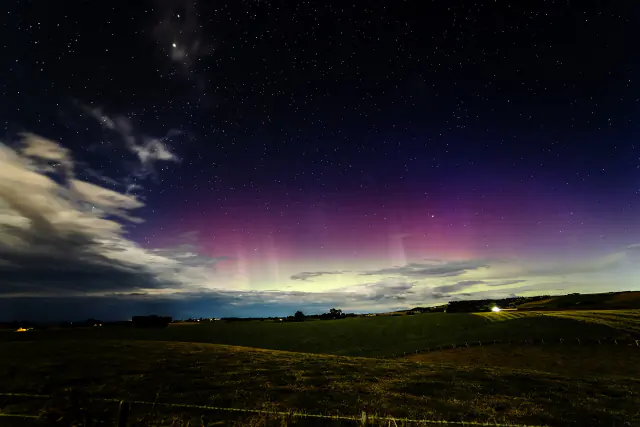
Modern camera technology has made Melbourne aurora more accessible — even when the display is too faint for the naked eye, long-exposure photography can reveal beautiful green, red, and purple hues along the southern horizon that are invisible to the unaided eye.
Where to See Aurora from Melbourne
Mornington Peninsula south of Melbourne provides the closest dark-sky access. Cape Schanck and Point Nepean offer south-facing ocean views with reduced light pollution. The peninsula's beaches face Bass Strait, providing unobstructed views toward the aurora zone.
Phillip Island, about 90 minutes from the city, offers darker conditions and the famous Penguin Parade foreground. Wilsons Promontory (2.5 hours south) provides the darkest conditions and most southerly mainland viewing point.
Closer to the city, Brighton Beach (with its iconic bathing boxes) and St Kilda Pier provide urban aurora viewing during strong events. The You Yangs west of Melbourne and Arthurs Seat on the Mornington Peninsula provide elevated viewpoints.
Tips for Catching Aurora in Melbourne
Success with Melbourne aurora is all about monitoring and preparation. Download aurora forecast apps, follow social media groups like 'Aurora Australis Australia,' and sign up for space weather alerts. When a KP 7+ event is forecast, be ready to drive south at short notice.
Melbourne's major international airport (MEL) serves as a hub for domestic and international flights, making the city an accessible starting point. If aurora is a priority, consider combining Melbourne with a trip to Tasmania for much more reliable southern lights viewing.
Melbourne winters are cool and wet (6°C to 14°C), with frequent frontal systems. Southerly cold fronts after rain can bring brief but clear windows that coincide with enhanced aurora activity. Be prepared to wait out cloud and seize clear windows when they appear.
Plan the trip
Getting to Melbourne
Aurora trips need three things booked together: a flight into the right airport, somewhere dark to stay, and usually a car, because the sky you get is the sky above wherever you can drive to that night.
Compare flightsLive fares into Melbourne Airport (MEL), the closest airport to Melbourne.
Affiliate links. Booking through them costs you nothing extra and helps keep this site running.
Borealis App
Aurora forecasts, social feed & Hunter Ranks
Frequently Asked Questions
Visible aurora (faint green glow on the southern horizon) occurs perhaps 2-5 times per year during solar maximum, with vivid overhead displays even rarer. Camera sensors reveal aurora that the naked eye misses, so 'photographic aurora' events are more common. During solar minimum, events may not occur for months.
For the best experience, yes — driving 60-90 minutes south to the Mornington Peninsula or Phillip Island dramatically reduces light pollution. During exceptionally strong events (KP 8-9), faint aurora can be visible from suburban locations with a clear southern horizon.
The austral winter (April-September) provides the longest and darkest nights. The equinox periods (March and September) bring heightened geomagnetic activity. However, aurora events are driven by solar activity, not season — they can occur whenever a major geomagnetic storm reaches Earth.
If aurora viewing is a priority, Tasmania is significantly better — it sees aurora at KP 4+ versus Melbourne's KP 7+, meaning roughly 5-10 times more events per year. Melbourne is a starting point; Tasmania is the destination for serious southern lights viewing.
Related Articles
Destination
Northern Lights in Tasmania
Tasmania is Australia's best location for witnessing the aurora australis. The island state's southern latitude, dark wi...
Destination
Northern Lights in Wilsons Promontory
Wilsons Promontory, the southernmost point of mainland Australia, is one of the continent's best dark-sky destinations a...
Destination
Northern Lights in Bruny Island
Bruny Island off Tasmania's southeast coast offers exceptional aurora australis viewing from a position further south th...