Northern Lights Destination
Northern Lights in Scotland
Scotland offers something no Arctic destination can match: the northern lights framed by medieval castles, misty Highland glens, and the wild coastlines of islands where Norse and Celtic traditions blend. When geomagnetic storms push the aurora south, Scotland's dark skies transform into a stage for one of nature's most enchanting performances.
Northern Lights in Scotland: A Hidden Gem
Scotland occupies the northernmost reaches of the British Isles, with its mainland stretching from 55°N to 58.6°N and the Shetland Islands reaching 60.8°N — the same latitude as southern Norway and Helsinki. This position places Scotland within reach of the aurora borealis during periods of moderate to strong geomagnetic activity, making it the most accessible aurora destination in the UK.
While Scotland cannot match the consistency of Arctic destinations like Tromso or Abisko, it offers something uniquely its own: aurora displays framed by iconic Scottish landscapes. Imagine the northern lights shimmering above the Old Man of Storr on the Isle of Skye, reflecting in the mirror-still waters of a Highland loch, or dancing above the neolithic stone circles of Orkney. These compositions blend natural wonder with cultural heritage in ways that no purpose-built aurora destination can replicate.
Scotland's dark sky credentials are impressive. The country is home to two International Dark Sky Parks (Galloway Forest and Tomintoul & Glenlivet) and numerous dark sky discovery sites. Away from the Central Belt cities (Glasgow and Edinburgh), light pollution is minimal, and the sparsely populated Highlands and Islands offer some of Europe's darkest skies.
The Shetland Islands deserve particular mention. At 60°N, Shetland's latitude is comparable to southern Scandinavia, and the islands enjoy a strong aurora tradition. The local name for the northern lights is Mirrie Dancers, and sightings are celebrated with community excitement. Shetland's lack of light pollution, wide-open horizons, and dramatic coastal scenery make it Scotland's premier aurora viewing location.
Best Time to See Northern Lights in Scotland
The Scottish aurora season runs from September through March, with the best chances concentrated in the darker months of October through February. Scotland's relatively southerly position means aurora viewing requires a combination of dark skies and sufficient geomagnetic activity to push the auroral oval southward.
October and November offer the autumn equinox aurora enhancement and increasingly long dark nights. The Scottish weather is variable — Atlantic storm systems can bring prolonged cloud cover — but clear gaps between weather fronts can reveal stunning aurora over dramatically lit landscapes.
December and January provide the longest nights (the Highlands receive as little as 6 hours of daylight around the solstice). The extended darkness means that if aurora activity occurs, you have a large viewing window. Winter storms are frequent but also bring dramatic sky clearing.
February and March combine the spring equinox aurora boost with slowly lengthening days. March is statistically one of the most geomagnetically active months of the year, and several of Scotland's most spectacular aurora events in recent years have occurred in late February and March.
The critical factor for Scottish aurora is the KP index. For mainland Scotland (55-58°N), you generally need a KP of 4 or higher for visible aurora on the northern horizon, and KP 5+ for overhead displays. For Shetland (60°N), KP 3-4 is sufficient. Monitor our aurora forecast and AuroraWatch UK (Lancaster University's aurora alert service) for real-time notifications. Signing up for email or Twitter alerts means you will be notified when conditions favor Scottish aurora.
Best Places to See Northern Lights in Scotland
Shetland Islands — At 60°N, Shetland is Scotland's best aurora location by latitude. The islands have virtually no light pollution outside Lerwick, and the wide, open landscapes provide unobstructed northern horizons. Eshaness cliffs, Sumburgh Head lighthouse, and the tombolo at St Ninian's Beach are exceptional viewing spots. The locals call the aurora Mirrie Dancers and can often be found watching from their doors on active nights.
Orkney Islands — Slightly further south at 59°N, Orkney combines good aurora potential with the dramatic setting of neolithic monuments. The Ring of Brodgar, Skara Brae, and the Italian Chapel provide foregrounds that connect aurora viewing with 5,000 years of human history. Orkney's flat terrain offers excellent horizons, and the lack of trees means unobstructed views in all directions.
Cairngorms National Park — Scotland's largest national park includes the Tomintoul & Glenlivet Dark Sky Park, one of only a handful of International Dark Sky Parks in the UK. The elevated terrain of the Cairngorm plateau (up to 1,309 meters) can place you above low-level cloud, and the park's location in northeast Scotland offers relatively sheltered weather compared to the west coast.
Isle of Skye — The most dramatically scenic of the Scottish islands offers jaw-dropping aurora photography opportunities when conditions align. The Old Man of Storr, the Quiraing, Neist Point lighthouse, and the Fairy Pools are all legendary photography locations that become magical under the aurora. Skye's latitude (57°N) requires KP 4+ for strong displays.
Caithness — The northernmost county on the Scottish mainland, Caithness offers dark skies and unobstructed northern views across the Pentland Firth toward Orkney. Dunnet Head, the most northerly point on the British mainland, provides a superb aurora vantage point. The Caithness coast is relatively flat and treeless, giving wide-open horizons ideal for catching low aurora arcs.
Additional good locations include Aberdeenshire (especially the coast around Rattray Head and Cruden Bay), Moray (the Moray Firth coast offers dark skies and northern views), and Galloway (Scotland's other Dark Sky Park, though its more southerly latitude requires stronger storms).
What Aurora Displays Look Like in Scotland
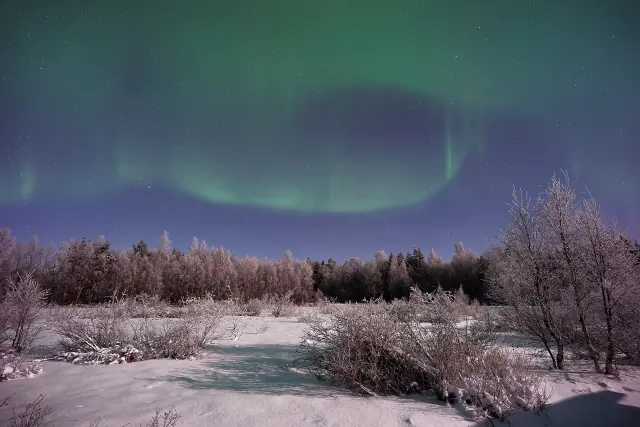
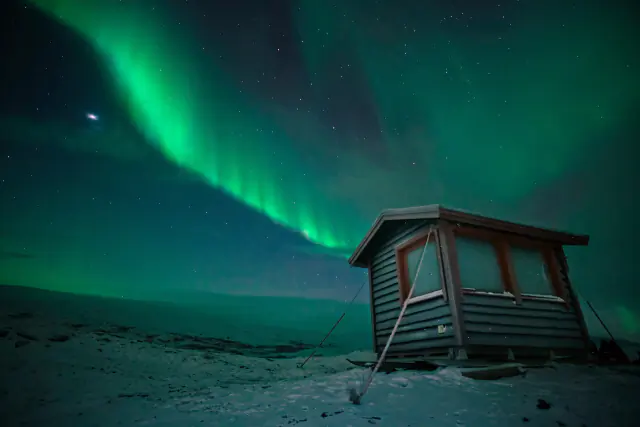
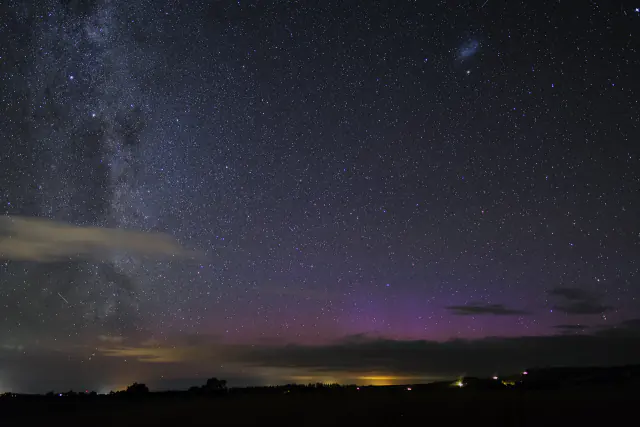
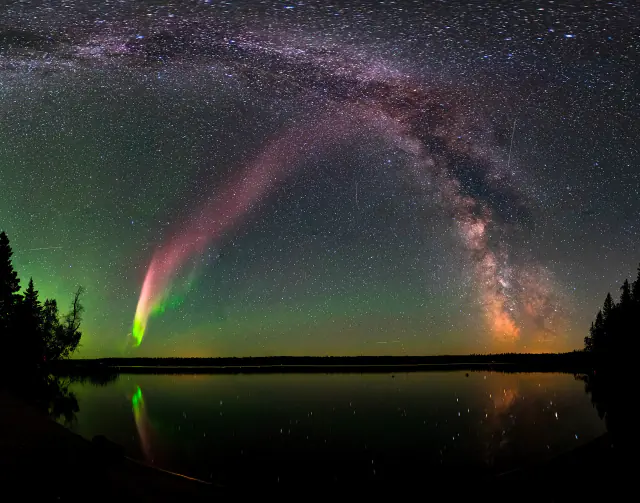
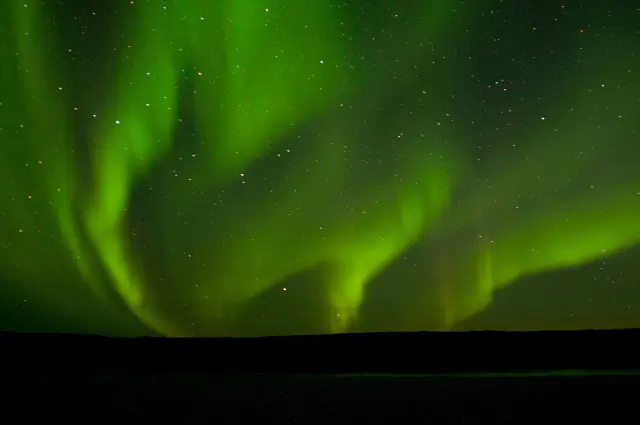
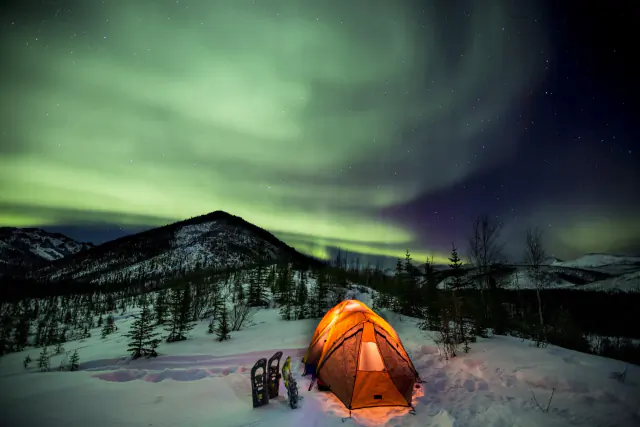
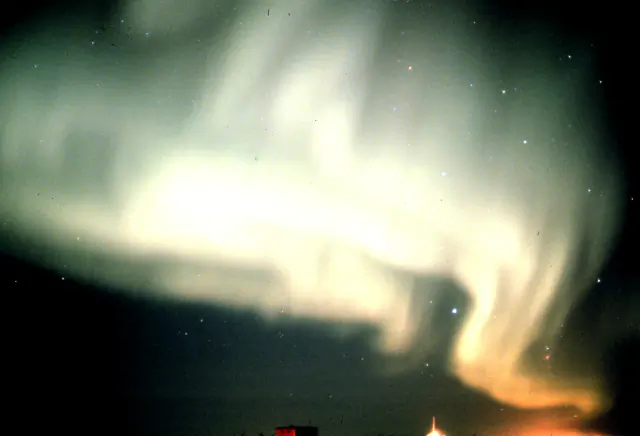
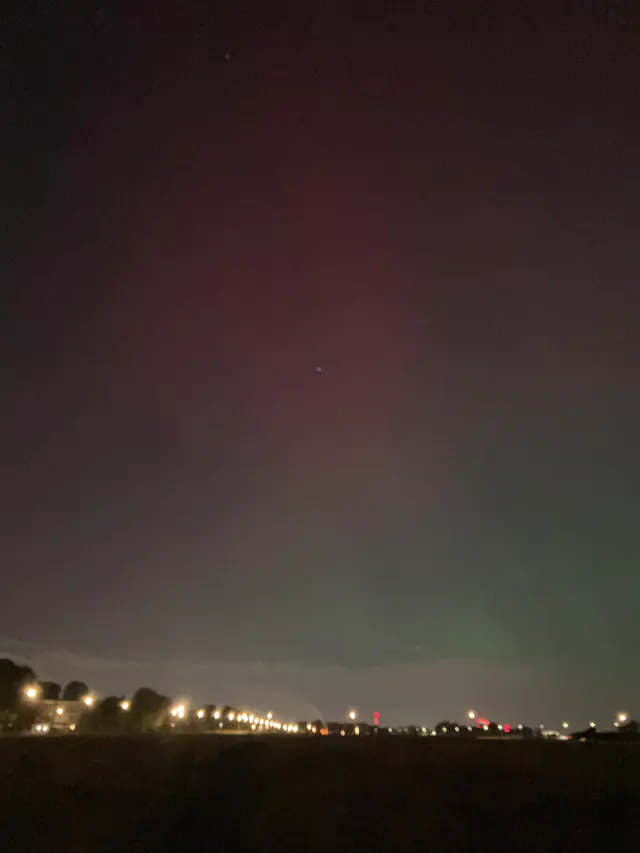
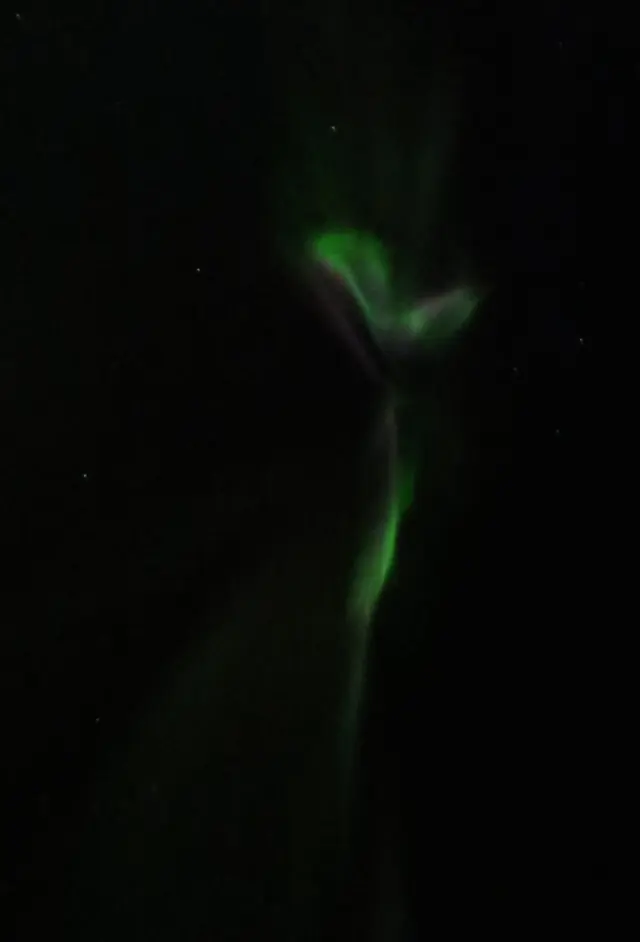
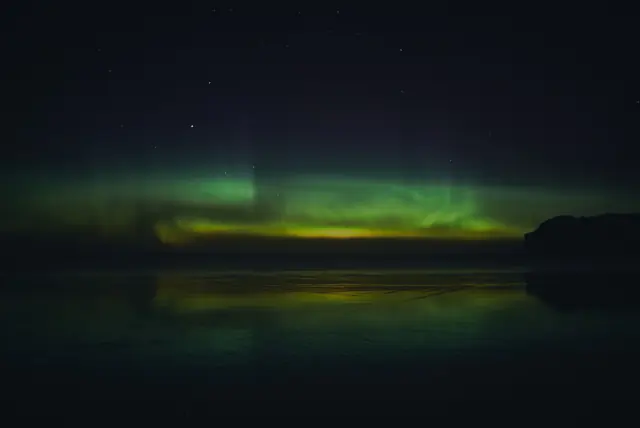
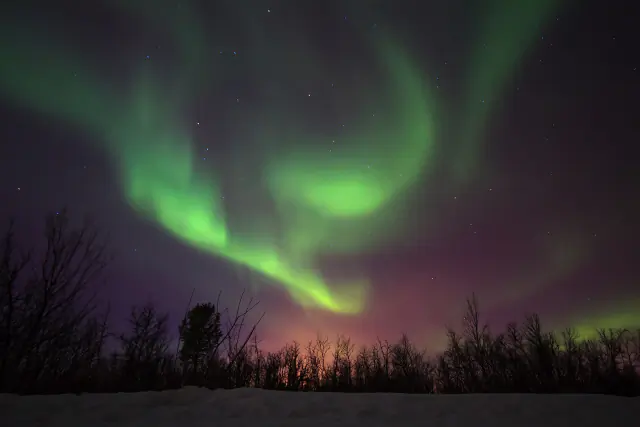
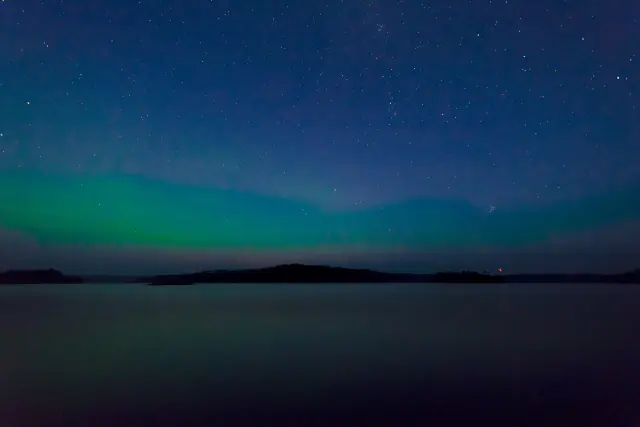
Scottish aurora displays differ from those seen at higher latitudes. At Scotland's latitude, the aurora typically appears as a green or greenish-white glow along the northern horizon, sometimes with vertical rays or columns extending upward. During stronger storms (KP 5-6+), the display can expand southward across the sky, developing vivid colors including purple, pink, and red.
It is important to note that cameras see aurora better than the naked eye at Scottish latitudes. What appears as a faint grey-green glow to your eyes will often reveal vivid colors on a long-exposure photograph. This does not mean the experience is less rewarding — there is something deeply moving about watching the sky shimmer and glow in the Scottish Highlands, knowing you are witnessing the same phenomenon that inspired Norse myths of Bifrost bridge.
During major geomagnetic storms (KP 7+), Scotland can experience truly spectacular displays. Events like the famous aurora of March 2024 and October 2024 produced vivid, multi-colored displays visible from every corner of Scotland, including urban areas like Edinburgh and Glasgow. These events occur perhaps 2-4 times per year but are the displays that make headlines and fill social media with stunning Scottish aurora photographs.
The Scottish atmosphere adds enormously to the experience. Aurora viewing in Scotland is not a clinical observation — it is an atmospheric immersion. The sound of waves crashing on rocky coasts, the scent of peat smoke from a distant cottage, the silhouette of a ruined castle against shimmering sky — these sensory layers make Scottish aurora viewing uniquely memorable, even when displays are modest by Arctic standards.
Tips for Northern Lights Viewing in Scotland
Set up aurora alerts. Since Scottish aurora requires elevated geomagnetic activity, advance notice is essential. Register with AuroraWatch UK (Lancaster University), which sends free email and Twitter alerts when aurora is likely visible from the UK. Our aurora forecast also provides relevant data. The key indicators are the KP index (aim for 4+ for mainland Scotland, 3+ for Shetland) and the Bz component of the interplanetary magnetic field (you want it pointing southward).
Be flexible and mobile. Scottish weather is notoriously changeable, and cloud cover is the biggest enemy. Having a car allows you to drive toward clear skies — weather patterns often differ between Scotland's east and west coasts. Check the Met Office satellite imagery for real-time cloud gaps. A 30-minute drive can make the difference between cloud and clear sky.
Face north from a dark location. This sounds obvious but is worth emphasizing. Get to a location with an unobstructed northern horizon and no light pollution — no streetlights, no headlights, no towns on the horizon. Allow your eyes 20-30 minutes to adapt to darkness. The aurora often begins as a faint glow that is easy to miss if your eyes are not fully dark-adapted.
Bring warm, waterproof layers. Scottish winter weather is wet and windy rather than extremely cold. Temperatures rarely drop below -5°C, but the combination of rain, wind, and damp cold can be deeply uncomfortable. Waterproof outer layers are more important than extreme cold-weather gear. A thermos of hot tea or whisky (or both) is a Scottish aurora-watching essential.
Combine aurora watching with Scottish travel. Do not travel to Scotland solely for the northern lights — the odds of a strong display on any given night are lower than in Arctic destinations. Instead, plan a Scottish trip that includes distillery tours, castle visits, Highland hiking, island hopping, and whisky tasting, with aurora watching as a thrilling bonus. If the lights appear, it is magical; if they do not, Scotland has more than enough to justify the journey.
Try long-exposure photography even if the aurora looks faint. Set your camera to ISO 3200-6400, aperture f/2.8, and 10-15 second exposure. You may be amazed to see vivid greens and purples on your camera screen that your eyes perceived only as a faint glow. This is normal at Scottish latitudes and does not diminish the experience.
Borealis App
Aurora forecasts, social feed & Hunter Ranks
Frequently Asked Questions
Yes, absolutely. Scotland sees aurora displays multiple times per year, particularly from Shetland, Orkney, Caithness, and the northern Highlands. Major displays visible across all of Scotland occur 2-4 times annually during high solar activity periods. Shetland, at 60°N, sees aurora as frequently as some Scandinavian locations. The key is monitoring forecasts and being in a dark location on the right night.
For mainland Scotland (55-58°N), aim for KP 4 or higher for visible aurora on the northern horizon, and KP 5-6+ for displays that extend across the sky. For Shetland (60°N), KP 3-4 is often sufficient. For the Central Belt (Edinburgh/Glasgow), KP 5-6+ is needed. During rare major storms (KP 7-9), aurora can be vivid and multi-colored across all of Scotland.
October through March offers the best combination of dark skies and potential geomagnetic activity. The equinox months (October and March) are statistically favorable for strong aurora events. However, Scottish aurora is unpredictable and can occur on any clear dark night when geomagnetic conditions are right. Flexibility and aurora alerts are more important than choosing the perfect month.
Shetland (60°N) is the best location by latitude and sees the most frequent displays. Orkney, Caithness, and the north coast of the Highlands are also excellent. The Cairngorms Dark Sky Park offers inland viewing with dark skies. The Isle of Skye provides dramatic photography backdrops when conditions align. In general, the further north and the darker the sky, the better your chances.
A small number of operators offer aurora-focused tours, particularly in Shetland and the Highlands. However, Scotland's aurora is less predictable than Arctic locations, so most operators combine aurora watching with other activities (wildlife, photography, cultural tours). Self-guided aurora hunting with a rental car is the most common approach. Several Scottish photography workshops include aurora sessions during autumn and winter.
In Shetland, the northern lights are traditionally known as the 'Mirrie Dancers' (or 'Merry Dancers'). This name reflects the playful, dancing movement of the aurora across the sky. Shetland's Norse heritage connects to the broader Scandinavian aurora traditions, and the lights hold a special place in island culture. Locals often gather outside to watch major displays, sharing the experience as a community event.
Yes, but only during strong geomagnetic storms. Edinburgh is at 55.9°N and contends with light pollution from the city. During major events (KP 6+), aurora can be visible from elevated viewpoints like Calton Hill, Arthur's Seat, or the Pentland Hills. For better odds, drive 1-2 hours north to the Angus coast, Aberdeenshire, or the Cairngorms. Edinburgh residents should register for AuroraWatch UK alerts.
Related Articles
Destination
Northern Lights in Norway
Norway is the world's premier aurora borealis destination, offering dramatic Arctic landscapes, well-developed tourism i...
Destination
Northern Lights in Iceland
Iceland offers an otherworldly aurora borealis experience set against volcanic landscapes, glaciers, hot springs, and bl...
Destination
Northern Lights in Denmark
Denmark's Faroe Islands, perched in the North Atlantic between Scotland and Iceland, offer a surprisingly compelling aur...