Northern Lights Destination
Northern Lights in Tasmania, Australia
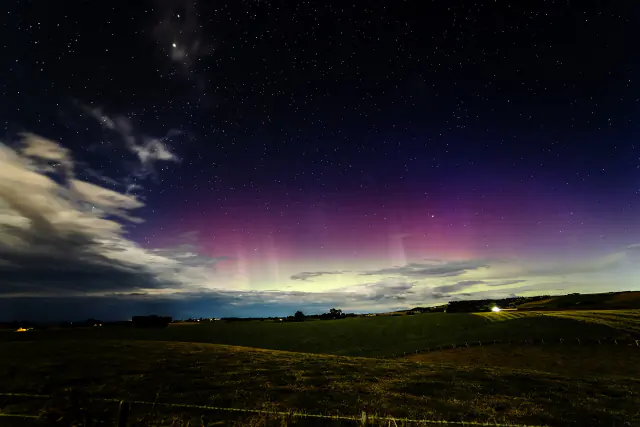
Tasmania is Australia's aurora australis capital — the island state's wild southern coastline and pristine dark skies provide the continent's most reliable southern lights viewing.
Australia's Best Aurora Australis Destination
Tasmania at 42.88°S is Australia's most southern state, extending nearly 4 degrees further south than mainland Australia. This latitude advantage, combined with relatively low light pollution and dramatic coastal landscapes, makes it far and away the best place in Australia to see the aurora australis.
Aurora viewing in Tasmania requires a KP index of 4 or higher, with the most impressive displays occurring during major geomagnetic storms (KP 6+). During active solar periods, Tasmanians report visible aurora several times per month — far more frequently than mainland Australia.
The island's World Heritage wilderness areas, covering about 20% of Tasmania, provide vast dark-sky areas free from light pollution. The combination of pristine nature, dramatic coastline, and southern exposure creates aurora viewing conditions unmatched elsewhere in Australia.
Best Aurora Viewing Spots in Tasmania
South Arm and Howden south of Hobart provide accessible dark-sky locations with south-facing ocean views across the D'Entrecasteaux Channel. These are the most popular aurora spots for Hobart residents, offering easy access and clear southern horizons.
Cockle Creek, the southernmost point accessible by road in Australia, provides remote wilderness viewing at the edge of the Southwest National Park. The dark, wild coastline here faces directly toward the aurora zone.
Bruny Island, accessible by ferry from Kettering, offers darker conditions than the mainland and a south-facing lighthouse at Cape Bruny. Cradle Mountain in the northwest provides mountain scenery, while the Bay of Fires on the east coast offers orange lichen-covered rocks as unique foreground.
The Tasman Peninsula and Port Arthur historic site provide dramatic cliff-line coastal viewing with the bonus of historic convict-era ruins as foreground subjects.
Planning Aurora Viewing in Tasmania
Hobart Airport (HBA) receives direct flights from Melbourne, Sydney, Brisbane, and other Australian cities. The Spirit of Tasmania ferry connects Devonport to Melbourne. Car rental is essential for reaching dark viewing locations.
Tasmania offers excellent accommodation and dining, with Hobart's waterfront and MONA museum making it a rewarding destination beyond aurora viewing. Self-drive itineraries are popular, allowing flexibility to chase clear skies across the island.
Tasmanian winters (June-August) are cool and changeable (2°C to 12°C), with frequent frontal systems bringing rain and cloud followed by clear spells. Southerly cold fronts are particularly promising — they clear clouds quickly while also potentially enhancing aurora activity through increased solar wind interaction.
Plan the trip
Getting to Tasmania
Aurora trips need three things booked together: a flight into the right airport, somewhere dark to stay, and usually a car, because the sky you get is the sky above wherever you can drive to that night.
Compare flightsLive fares into Hobart Airport (HBA), the closest airport to Tasmania.
Affiliate links. Booking through them costs you nothing extra and helps keep this site running.
Borealis App
Aurora forecasts, social feed & Hunter Ranks
Frequently Asked Questions
During active solar periods, Tasmania sees visible aurora several times per month — perhaps 10-25 events per year from dark locations. Major displays with vivid overhead color occur roughly 3-8 times per year. During solar minimum, frequency drops significantly.
Significantly better. Tasmania's 4-degree latitude advantage over Melbourne means aurora is visible at lower KP levels (4 vs 7) and much more frequently. The island's darker skies and south-facing coastline provide far superior viewing conditions.
South Arm and Howden near Hobart are the most accessible dark-sky spots. Cockle Creek (southernmost road in Australia) and Bruny Island offer darker conditions. Cradle Mountain provides mountain scenery. Choose based on weather — be prepared to drive to wherever skies are clear.
The austral winter (April-September) provides the longest and darkest nights. June-August offers maximum darkness. The equinox periods (March and September) bring heightened geomagnetic activity. Any clear winter night with KP 4+ has potential.
Related Articles
Destination
Northern Lights in Bruny Island
Bruny Island off Tasmania's southeast coast offers exceptional aurora australis viewing from a position further south th...
Destination
Northern Lights in Cradle Mountain
Cradle Mountain-Lake St Clair National Park in Tasmania's northwest offers aurora australis viewing against one of Austr...
Destination
Northern Lights in Wilsons Promontory
Wilsons Promontory, the southernmost point of mainland Australia, is one of the continent's best dark-sky destinations a...