Northern Lights Destination
Northern Lights in Alaska
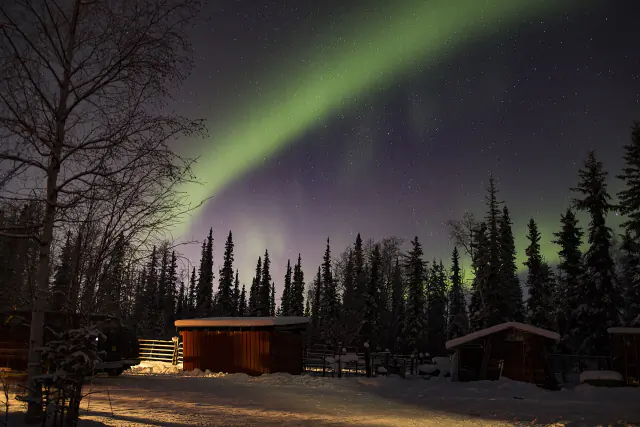
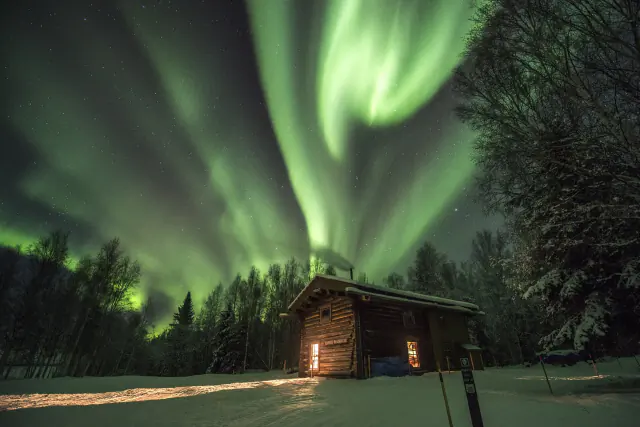
Alaska delivers the northern lights on an American scale: bigger, bolder, and backed by a wilderness so vast that entire European nations could disappear within it. From the warm waters of Chena Hot Springs to the frozen peaks of Denali, Alaska's aurora experiences combine frontier spirit with genuine Arctic grandeur.
Why Alaska Is America's Aurora Capital
Alaska is the only U.S. state with territory well inside the auroral oval, and its position gives it a significant advantage over any other American location for northern lights viewing. Fairbanks, at 64.8°N and a magnetic latitude of approximately 65°, sits directly beneath the zone of maximum aurora frequency. The city records aurora activity on an estimated 80% of clear nights during peak season — a rate that rivals the best destinations in Scandinavia and Canada.
What makes Alaska special is the combination of accessibility and wilderness. Fairbanks is a modern city with an international airport, hotels, restaurants, and car rental agencies, yet within minutes of downtown you can reach viewing locations with virtually zero light pollution. The University of Alaska Fairbanks operates the Geophysical Institute, one of the world's premier aurora research centers, which provides a detailed daily aurora forecast that has become an essential tool for aurora hunters worldwide.
Alaska's diverse geography creates unique aurora backdrops unavailable elsewhere. Watch the lights from natural hot springs at Chena, where steam rises against a curtain of green. See the aurora frame Denali (Mount McKinley), North America's tallest peak at 6,190 meters. Or witness the lights over sea ice and frozen tundra near Barrow (Utqiagvik), the northernmost city in the United States. Each location offers a distinctly Alaskan aurora experience.
Alaska also benefits from lower costs and easier logistics for American travelers compared to international aurora destinations. No passport is needed, domestic flights from Seattle take just 3.5 hours to Fairbanks, and accommodation and tour costs are generally lower than in Norway or Iceland. For U.S.-based aurora seekers, Alaska removes most of the barriers to experiencing the northern lights.
Best Time to See Northern Lights in Alaska
The Alaska aurora season runs from mid-August through mid-April, with peak viewing conditions from September through March. Alaska's high latitude means darkness returns early in autumn, and the long winter nights provide ample viewing time.
Late August and September offer a beautiful introduction to the Alaskan aurora season. Night skies darken by late August, and the autumn equinox boosts activity. Temperatures are relatively mild (0°C to -10°C in Fairbanks), fall colors are spectacular, and there is still enough daylight for scenic drives and hiking. September is many Fairbanks locals' favorite aurora month.
October and November bring deepening winter and increasing darkness. Clear skies become more frequent as the dry winter air mass establishes over interior Alaska. By late November, Fairbanks sees only about 4 hours of daylight, creating a vast window for aurora viewing that can extend from 4 PM to 10 AM.
December through February are the peak winter months. The winter solstice brings fewer than 4 hours of usable daylight to Fairbanks, but the trade-off is maximum darkness and often-spectacular aurora displays. Temperatures are severe: Fairbanks averages -23°C in January and can drop below -40°C during cold snaps. The extreme cold produces incredibly clear, stable air that makes aurora displays vivid and sharply defined.
March is widely considered the best overall month. Daylight increases rapidly, providing stunning photography conditions with blue-hour auroras. The spring equinox enhances geomagnetic activity. Temperatures moderate to a more tolerable -10°C to -20°C, and daylight allows for daytime activities like dog mushing and snowmobiling.
The aurora forecast and the University of Alaska Fairbanks Geophysical Institute forecast are essential tools. Check the KP index regularly — Fairbanks needs only KP 1-2 for visible displays, while Anchorage typically requires KP 4-5.
Best Northern Lights Viewing Spots in Alaska
Fairbanks — The aurora capital of the United States. Fairbanks sits at 64.8°N beneath the auroral oval and enjoys a continental climate with frequent clear skies. Top viewing spots include Murphy Dome (a former military radar site 30 minutes from town), Cleary Summit (a hilltop with 360-degree views on the Steese Highway), and Ester Dome (popular with local photographers). The Geophysical Institute at the University of Alaska Fairbanks provides daily aurora forecasts and hosts research-grade viewing equipment.
Chena Hot Springs — Located 100 km east of Fairbanks, Chena Hot Springs Resort offers the quintessential Alaskan aurora experience: soaking in a natural hot spring while watching the northern lights dance overhead. The resort sits in a mountain valley with excellent dark skies and provides aurora wake-up calls for guests. The combination of warm water, cold air, and aurora above is one of Alaska's most iconic travel images.
Denali National Park — The park entrance area at 63.7°N offers aurora viewing with North America's tallest mountain as a potential backdrop. The park road closes to vehicles in winter beyond Mile 3, but this restriction eliminates light pollution and creates ideal viewing conditions. The Mountain Vista and Teklanika viewpoints provide stunning compositions when Denali is visible on clear nights.
Coldfoot — A tiny truck stop community at 67.2°N on the Dalton Highway (the famous haul road from the TV series Ice Road Truckers). Coldfoot is well above the Arctic Circle and sits in some of the most remote and dark terrain accessible by road in the United States. The Coldfoot Camp lodge offers basic accommodation and aurora viewing experiences in extraordinary isolation.
Nome — Situated on the Bering Sea coast at 64.5°N, Nome offers a unique coastal aurora experience. The lights over sea ice and the Bering Sea create compositions unavailable elsewhere in Alaska. Nome's Gold Rush history and Iditarod race finish line add cultural interest, though access is by air only (no road connection to the main highway system).
What to Expect When Viewing Aurora in Alaska
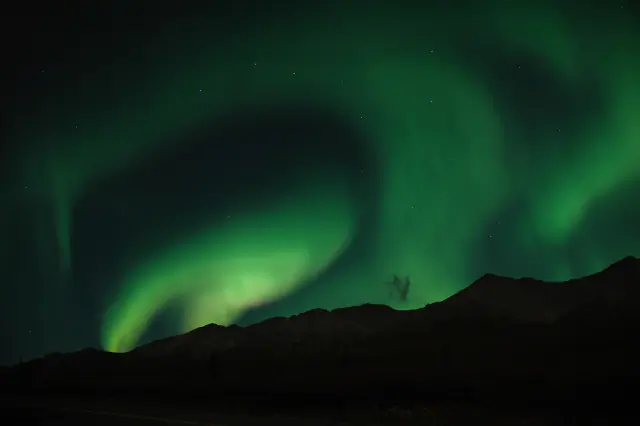
Alaskan aurora displays are characteristically bright and active. Due to the proximity of the magnetic north pole to the North American continent, Alaska often experiences auroral substorms that produce rapid, dynamic displays with coronas, curtains, and spirals covering the entire sky. On active nights, the aurora can be so bright it casts shadows on the snow — an experience that stops even seasoned aurora watchers in their tracks.
The typical Fairbanks aurora viewing experience involves driving to a dark location 20-40 minutes from the city center. Tour companies offer guided excursions that include transportation, hot drinks, campfire, and photography assistance. Self-guided visitors can drive to established viewpoints like Murphy Dome, Cleary Summit, or Ester Dome and park in the pull-off areas. Expect to spend 2-5 hours outside, depending on activity levels and your cold tolerance.
The Chena Hot Springs experience is unique to Alaska. The natural hot spring maintains a temperature of approximately 41°C (106°F) year-round, creating a surreal contrast when the air temperature is -30°C and the aurora is exploding overhead. The resort provides robes, towels, and lockers, and the spring is lit only by minimal red lighting that preserves night vision.
Cold is the defining challenge of Alaskan aurora viewing. Interior Alaska is significantly colder than coastal Scandinavia — Fairbanks in January averages -23°C, compared to Tromso's -4°C. Exposed skin can develop frostbite in minutes at these temperatures. Camera batteries die in 15-20 minutes, metal tripod legs conduct cold painfully through gloves, and LCD screens can become sluggish or fail. All of these challenges are manageable with preparation, but they require respect and planning.
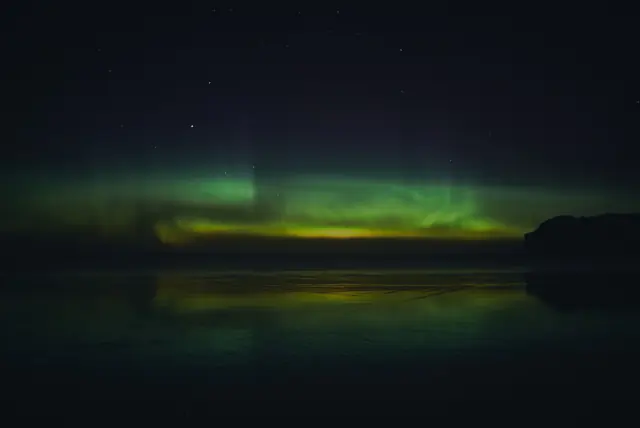
On an active night, you can expect to see aurora ranging from subtle green arcs on the northern horizon to full-sky explosions of green, purple, and red. The most common pattern begins with a quiet arc that gradually brightens and begins to undulate, then breaks into dynamic curtains that race across the sky. Peak activity often occurs between 10 PM and 2 AM, though substorms can happen at any time during the night.
Essential Tips for Alaska Aurora Viewing
Use the Geophysical Institute forecast. The University of Alaska Fairbanks publishes a daily aurora forecast that predicts activity levels on a scale from 0 (low) to 9 (extreme). This forecast is remarkably accurate for 1-3 day predictions and is available on their website and via their email subscription list. Combine it with our aurora forecast for the most comprehensive picture.
Rent a car with an engine block heater. At -30°C and below, vehicles that sit overnight without a block heater may not start. Most Fairbanks rental cars come equipped with block heaters — confirm this when booking. Many hotels and parking lots provide electrical outlets specifically for block heaters. If self-driving to aurora viewpoints, leave your engine running while viewing to ensure you can get home.
Bring serious cold weather gear. For Fairbanks in midwinter, you need: expedition parka rated to -40°C or below, insulated bib overalls, bunny boots (military-style vapor barrier boots) or equivalent rated to -40°C, beaver or wolf fur hat, expedition mittens with liner gloves, and a neck gaiter or balaclava. Fairbanks outdoor stores like Big Ray's rent and sell quality Arctic gear.
Combine aurora viewing with Alaskan adventures. Dog mushing is a quintessential Alaskan experience — operators near Fairbanks offer everything from one-hour rides to multi-day wilderness expeditions. Visit the Chena Hot Springs ice museum, go snowmobiling in the White Mountains, or take a flightseeing tour of Denali on a clear day. If visiting in March, the Iditarod sled dog race and the World Ice Art Championships in Fairbanks provide unforgettable cultural context.
Plan for variable conditions. Interior Alaska can experience temperature swings of 20°C in a single day. Cloud cover can change rapidly, especially during transitional months. Stay flexible with your schedule and be prepared to change plans based on conditions. Having a rental car gives you the ability to drive toward clear skies if needed.
Borealis App
Aurora forecasts, social feed & Hunter Ranks
Frequently Asked Questions
March is widely considered the optimal month, offering a balance of dark nights, increasing daylight for activities, spring equinox aurora enhancement, and moderating temperatures. September is also excellent, with milder weather and beautiful fall colors. The full season runs from mid-August through mid-April, with December through February offering the most darkness but extreme cold.
Occasionally, yes. Anchorage is at 61°N and below the auroral oval's peak, so it requires stronger geomagnetic activity (KP 4-5+) for visible displays. During major storms, aurora can be spectacular from Anchorage. For reliable viewing, Fairbanks (3.5 hours north by car or 45 minutes by air) is far superior. If you are in Anchorage and aurora is forecast, drive north toward Hatcher Pass or Talkeetna for darker skies.
Fairbanks is one of the coldest aurora destinations in the world. September averages -2°C, comfortable for extended viewing. By December, the average drops to -22°C. January averages -23°C with lows regularly reaching -35°C to -45°C. The extreme cold produces remarkably clear skies and vivid aurora, but proper Arctic clothing is absolutely essential.
Absolutely. Soaking in natural hot springs while watching the aurora overhead is one of Alaska's signature experiences. The resort is 100 km east of Fairbanks in a mountain valley with excellent dark skies and provides aurora wake-up calls. The contrast of warm water and cold Arctic air beneath dancing lights is unforgettable. Book well in advance during peak season.
No. Many visitors successfully self-guide by renting a car and driving to dark locations outside Fairbanks (Murphy Dome, Cleary Summit, Ester Dome). The Geophysical Institute forecast tells you when to expect activity. However, guided tours provide heated shelters, hot drinks, local knowledge, photography assistance, and the comfort of not driving on icy roads at -30°C. Both approaches are valid.
Fairbanks International Airport (FAI) receives direct flights from Anchorage (45 minutes), Seattle (3.5 hours), and Minneapolis seasonally. Alaska Airlines and Delta are the primary carriers. From Anchorage, you can also drive the Parks Highway (5.5 hours) through stunning scenery past Denali National Park. The Alaska Railroad runs between Anchorage and Fairbanks year-round (12 hours), one of the great scenic rail journeys in North America.
No. Alaska's famous midnight sun means it never gets dark enough to see the aurora from mid-May through late July. The aurora is still occurring overhead but is completely washed out by daylight. The viewing season begins in mid-August when darkness returns to the night sky.
Related Articles
Destination
Northern Lights in Canada
Canada offers vast wilderness aurora viewing across its northern territories, from the aurora capital of Yellowknife to ...
Destination
Northern Lights in USA
The contiguous United States offers surprising northern lights viewing opportunities across its northern tier, from the ...
Destination
Northern Lights in Iceland
Iceland offers an otherworldly aurora borealis experience set against volcanic landscapes, glaciers, hot springs, and bl...