Northern Lights Destination
Northern Lights in Haines Junction, Canada
Haines Junction sits at the edge of Kluane National Park's UNESCO wilderness — where the St. Elias Mountains, North America's greatest ice fields, and the northern lights converge in breathtaking isolation.
Aurora at the Gateway to Kluane
Haines Junction at 60.75°N occupies one of the most spectacular geographic positions of any small community in Canada. The village of fewer than 900 people sits at the junction of the Alaska Highway and the Haines Road, directly adjacent to Kluane National Park and Reserve — a UNESCO World Heritage Site encompassing 22,013 km² of mountains, glaciers, and sub-alpine terrain.
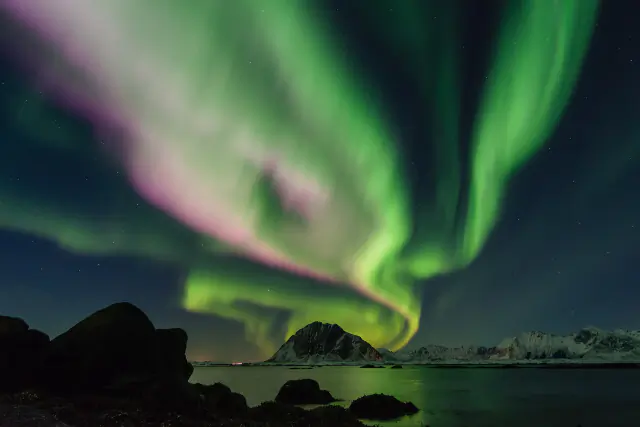
The Kluane region contains the largest non-polar ice fields in the world and is dominated by the St. Elias Mountains, which include Canada's highest peak, Mount Logan at 5,959 meters. This extraordinary mountain landscape creates a dramatic backdrop for aurora displays that few places on Earth can rival. When the northern lights appear above these peaks, the resulting spectacle is truly otherworldly.
A KP index of 4 is sufficient for reliable aurora visibility at this latitude, and Haines Junction's near-zero light pollution means even modest geomagnetic activity produces visible displays. The community's extreme wilderness setting ensures that stepping a few minutes outside the town center places you in conditions comparable to the most remote aurora destinations anywhere. Check the aurora forecast before venturing out for the best results.
Best Aurora Viewing Spots Near Haines Junction
The Kluane Lake Road and the shores of Kluane Lake itself provide some of the finest aurora viewing in the Yukon. Kluane Lake, the largest lake in Yukon Territory, sits at 820 meters elevation and provides an enormous, dark reflective surface. The St. Elias Mountains rise dramatically on the southern horizon, and on clear nights, the combination of mountain silhouettes and northern lights is extraordinary.
Soldier Summit, a scenic overlook on the Alaska Highway between Haines Junction and Whitehorse, offers elevated views with panoramic mountain scenery. The pull-off areas along the Alaska Highway approaching Haines Junction from the east provide increasingly dramatic mountain backdrops as you near the St. Elias range.
For the most remote viewing, the Dezadeash Lake area southwest of Haines Junction offers a large lake foreground with Kluane wilderness on all sides. The Haines Road south toward Haines, Alaska, which passes through the stunning Chilkat Pass, provides mountain pass viewing with virtually no light pollution whatsoever. Read our aurora photography guide for tips on capturing mountain aurora compositions.
Best Time to Visit Haines Junction for Aurora
The aurora season in Haines Junction spans from September through March, with the best conditions typically arriving in September as darkness returns after the midnight sun. September combines moderate temperatures, occasional unfrozen lake reflections, and early-season aurora activity around the autumn equinox — one of the statistically most productive periods for geomagnetic activity.
The winter months of January and February offer the longest nights and the most reliable cold, clear skies. The St. Elias region receives considerable mountain precipitation, so clear windows require careful monitoring of weather forecasts. When clear nights do arrive in winter, the combination of fresh snow on the mountains and the aurora overhead is spectacular.
March brings the spring equinox boost to aurora activity combined with improving temperatures and lengthening days. This makes March a particularly appealing month — you can explore Kluane's spectacular scenery during the day and watch the aurora at night. Temperatures in Haines Junction winter regularly reach -20°C to -35°C, so full arctic gear is essential. Consult our best time to see guide for equinox timing details.
Getting to Haines Junction and Practical Information
The nearest airport with regular service is Whitehorse (YXY), approximately 160 km east of Haines Junction via the Alaska Highway — about a 1.5-hour drive. Car rental in Whitehorse is essential, as there is no public transport to Haines Junction. Most visitors combine a stop in Whitehorse with a dedicated trip to Haines Junction for aurora viewing.
Accommodation options in Haines Junction include the Cozy Corner Motel and several B&Bs. The Kluane National Park Visitor Centre in Haines Junction provides excellent information on park access, trail conditions, and wildlife. The visitor centre can advise on the best current viewing locations within or adjacent to the park.
Wildlife near Haines Junction is abundant and spectacular — Dall sheep, grizzly bears, wolves, and moose all inhabit the surrounding area. During aurora viewing excursions, be wildlife-aware, carry bear spray in shoulder season, and let someone know your planned locations. The Kluane First Nation administers portions of the surrounding territory, and respecting their land stewardship is part of responsible visiting in this region.
Plan the trip
Getting to Haines Junction
Aurora trips need three things booked together: a flight into the right airport, somewhere dark to stay, and usually a car, because the sky you get is the sky above wherever you can drive to that night.
Compare flightsLive fares into Erik Nielsen Whitehorse International Airport (YXY), the closest airport to Haines Junction.
Affiliate links. Booking through them costs you nothing extra and helps keep this site running.
Borealis App
Aurora forecasts, social feed & Hunter Ranks
Frequently Asked Questions
Kluane National Park and Reserve is a UNESCO World Heritage Site in Yukon Territory, Canada. It encompasses 22,013 km² of mountains, glaciers, and wilderness dominated by the St. Elias Mountains. It contains the largest non-polar ice fields in the world and is home to Canada's highest peak, Mount Logan (5,959 m).
Fly into Whitehorse (YXY) and drive approximately 160 km west on the Alaska Highway — about a 1.5-hour drive. There is no public transport, so a rental car is essential. The Alaska Highway is maintained year-round but requires winter tires and careful driving in icy conditions.
Yes, you can view the aurora from within and adjacent to Kluane National Park. The park's roads and accessible areas are excellent viewing locations. However, most park hiking trails are not safe to use alone at night in winter — stick to roadside pull-offs and accessible lake areas for aurora viewing.
Yes — Haines Junction offers significantly darker skies than Whitehorse and a dramatically more impressive mountain backdrop. The St. Elias Mountains and Kluane wilderness create aurora compositions that are simply not available from Whitehorse. Many photographers make the 1.5-hour drive from Whitehorse specifically for the Kluane backdrop.
The Alaska Highway between Whitehorse and Haines Junction is well-maintained but can be icy and subject to blowing snow. Winter tires are legally required on Yukon highways from October through March. Carry emergency supplies, a full fuel tank, and check road conditions via the Yukon Government's road report before departing.
Related Articles
Destination
Northern Lights in Whitehorse
Whitehorse, the capital of Yukon Territory, is a vibrant gateway to northern aurora viewing. Nestled in a valley along t...
Destination
Northern Lights in Watson Lake
Watson Lake, Yukon, is famous for the Sign Post Forest — a beloved landmark now bearing over 100,000 signs — and sits in...
Destination
Northern Lights in Dawson City
Dawson City, the legendary Klondike Gold Rush town at the confluence of the Yukon and Klondike Rivers, offers some of th...