Northern Lights Destination
Northern Lights in Bodo, Norway
Bodo marks the gateway to Lofoten and the start of northern Norway's aurora territory - catch the northern lights from this dynamic Arctic coastal city.
Bodo: Aurora at the Gateway to Lofoten
Bodo (Bodo) sits at 67.28°N, just above the Arctic Circle, making it the first major city you encounter when entering Norway's aurora heartland from the south. As the largest city in Nordland county (population ~53,000), Bodo serves as the primary transport hub for reaching the Lofoten Islands and offers its own excellent aurora viewing opportunities.
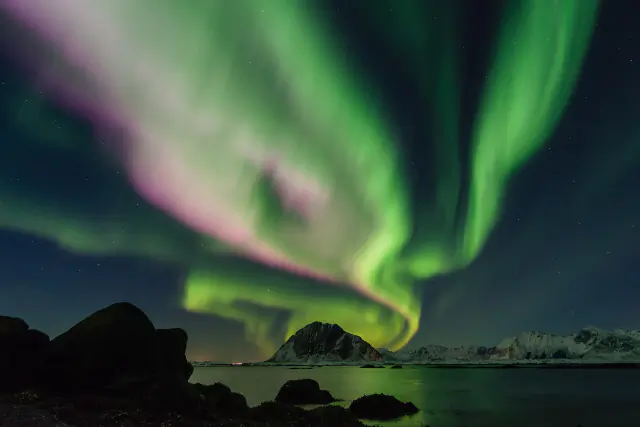
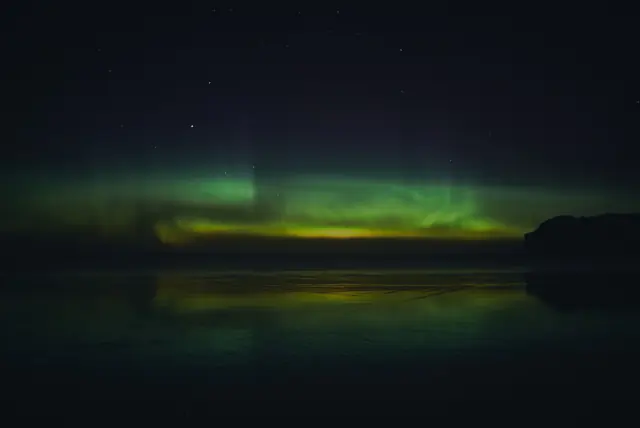
The city experienced a dramatic rebirth after being almost entirely destroyed during World War II and has reinvented itself as a modern, culture-forward city. In 2024, Bodo served as a European Capital of Culture, adding world-class cultural venues to its already impressive natural setting. The city faces the open Norwegian Sea, with the dramatic Lofoten wall visible on the horizon - a stunning backdrop for aurora displays.
At this latitude, a KP index of just 2 is sufficient for aurora activity. The coast can be windy and changeable, but when skies clear, the combination of sea, mountains, and aurora is magnificent. Monitor the aurora forecast for optimal viewing nights.
Best Aurora Viewing Spots in Bodo
Keiservarden: This popular hiking viewpoint (366m above sea level) offers a panoramic 360-degree view of the city, the sea, and the surrounding mountains. In winter, a groomed trail with torches leads to the summit. The elevated position puts you above much of the city's light pollution.
Mjelle Beach: Located within the Bodo municipality about 20 km from the center, this pristine beach in the Sjunkhatten National Park area offers very dark skies and a beautiful coastal setting. The beach faces northwest, giving excellent aurora viewing angles.
Saltstraumen: The world's strongest tidal current, located 30 minutes southeast of Bodo, offers a unique aurora experience. The swirling waters combined with the northern lights create an otherworldly atmosphere. Several viewpoints and a bridge span the narrow strait.
Knyken: A ski area about 15 minutes from Bodo that offers elevated viewpoints with reduced light pollution. The parking area at the base provides easy access even in winter conditions.
When to Visit Bodo for Northern Lights
The aurora season in Bodo runs from September through March. Unlike destinations further north, Bodo does not experience a complete polar night - the sun briefly dips below the horizon even in midwinter, giving a few hours of dusky twilight around noon.
September-October: Increasing darkness after the midnight sun period. Autumn storms can bring cloudy conditions, but clear nights offer dramatic aurora with autumn colors still present in the landscape.
November-February: Peak darkness with only 2-4 hours of twilight per day. Aurora viewing windows extend from late afternoon through the early morning hours. The combination of Bodo's latitude and its position within the auroral oval makes sightings frequent during geomagnetically active periods.
March: A favorite month for many visitors. Longer daylight hours allow for exploration and activities while still providing ample darkness for aurora viewing. Weather tends to be more stable as spring approaches. Read our March aurora guide for more details.
Getting to Bodo and Onward to Lofoten
Getting There: Bodo Airport (BOO) is well-served with multiple daily flights from Oslo, Tromso, and other Norwegian cities. The Nordland Line railway terminates in Bodo after a spectacular 10-hour journey from Trondheim - one of the world's great train rides.
Onward to Lofoten: Bodo is the departure point for ferries to Lofoten (Bodo-Moskenes, 3.5 hours) and flights to Svolvaer and Leknes. Many travelers combine a night or two in Bodo with a longer Lofoten trip. The ferry crossing itself offers aurora viewing potential on evening sailings.
Accommodation: Bodo has a good range of hotels from budget to upscale, concentrated in the compact city center. The Scandic Havet hotel sits right on the waterfront with views toward Lofoten. For a more rural experience, consider accommodation along the road to Saltstraumen.
Activities: Beyond aurora viewing, Bodo offers whale watching (orcas and humpbacks from October to January), visits to Saltstraumen, sea eagle safaris, and the excellent Nordland Museum. The city's restaurant scene has blossomed with the Capital of Culture investment.
Plan the trip
Getting to Bodo
Aurora trips need three things booked together: a flight into the right airport, somewhere dark to stay, and usually a car, because the sky you get is the sky above wherever you can drive to that night.
Compare flightsLive fares into Bodo Airport (BOO), the closest airport to Bodo.
Affiliate links. Booking through them costs you nothing extra and helps keep this site running.
Borealis App
Aurora forecasts, social feed & Hunter Ranks
Frequently Asked Questions
Yes, Bodo is an excellent aurora destination. At 67.28°N, it sits just above the Arctic Circle within the auroral zone, needing only a KP index of 2 for aurora activity. Clear nights from September through March regularly produce aurora displays.
Bodo is an excellent base, combining good aurora viewing with convenient transport links to Lofoten. The city offers modern amenities, diverse accommodation, and nearby dark-sky locations like Mjelle Beach and Saltstraumen, all within 30 minutes of the center.
You can take the car ferry from Bodo to Moskenes (3.5 hours, book in advance for vehicles), fly to Svolvaer or Leknes (30 minutes), or take the coastal express Hurtigruten ship. The ferry offers the most scenic approach, with Lofoten's dramatic peaks growing on the horizon.
Saltstraumen is the world's strongest tidal current, creating powerful maelstroms four times daily as 400 million cubic meters of water force through a narrow 3-km strait. It's located 30 minutes from Bodo and is a spectacular aurora viewing location - the swirling water reflecting the northern lights is truly unique.
Related Articles
Destination
Northern Lights in Lofoten
The Lofoten Islands offer one of the most photogenic northern lights experiences on Earth. Dramatic peaks rising from th...
Destination
Northern Lights in Svolvaer
Svolvaer is the administrative capital of the Lofoten Islands and the gateway to the archipelago's northern reaches. Thi...
Destination
Northern Lights in Narvik
Narvik is a dramatic fjord town flanked by steep mountains and rich World War II history. Its sheltered position within ...