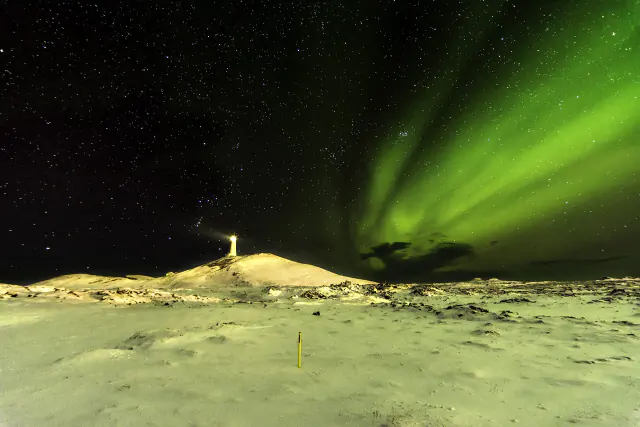
Northern Lights Destination
Northern Lights in Svalbard, Norway
Journey to the edge of the world at 78°N - Svalbard offers the most extreme northern lights experience on Earth during four months of continuous polar darkness.
Svalbard: Aurora at the Top of the World
Svalbard represents the ultimate frontier of northern lights travel. This Norwegian archipelago lies between 74°N and 81°N, with the main settlement of Longyearbyen at 78.22°N - making it the world's northernmost permanently inhabited community accessible by commercial flights. At this extreme latitude, Svalbard experiences four months of continuous polar night from mid-November to late January, during which the sun never rises above the horizon.
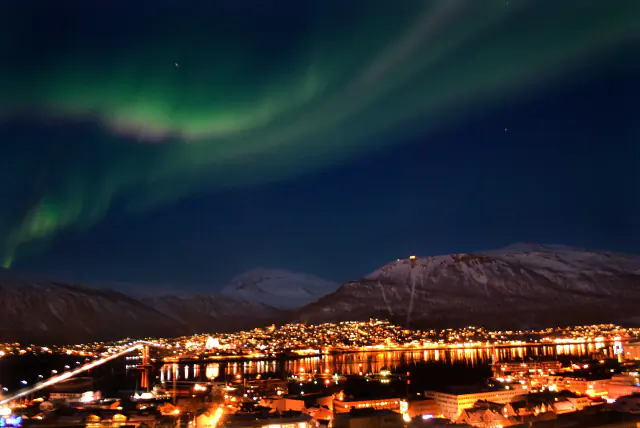
This extended darkness creates a phenomenon unique to Svalbard: the possibility of seeing aurora at virtually any hour of the day. While most aurora destinations limit viewing to nighttime, Svalbard's polar night means you might witness the lights while eating lunch or walking to the store. The displays here are often directly overhead rather than on the northern horizon, as Svalbard sits near the center of the auroral oval.
Svalbard needs a KP index of just 0-1 for aurora visibility, making it one of the most sensitive locations on Earth. However, the extreme latitude also means that during very strong geomagnetic storms (KP 7+), the auroral oval can actually expand south of Svalbard, temporarily reducing local activity. Check the aurora forecast for current conditions.
Where to Watch the Aurora in Svalbard
Longyearbyen is the only practical base for aurora viewing in Svalbard, as independent travel outside settlements requires a rifle for polar bear protection. However, several excellent viewing locations are accessible:
Adventdalen Valley: This wide glacial valley stretching east from Longyearbyen provides dark skies and open views. Organized snowmobile and dog sled tours take visitors into the valley for aurora viewing. The flat, snow-covered landscape creates perfect reflections.
Bjorndalen: A short drive or snowmobile ride from Longyearbyen, this valley offers excellent dark-sky conditions away from the town's modest light pollution. Several tour operators use this as a viewing base.
Mine 7 Area: The road to the old Mine 7 leads above the town and provides elevated viewpoints over Adventdalen and the surrounding mountains. The abandoned mining infrastructure creates dramatic foregrounds for photography.
Plateau Mountain (Platafjellet): Accessible by snowmobile, the plateau above Longyearbyen offers 360-degree panoramic views of the Arctic landscape. The elevation helps you rise above any low-lying fog or cloud.
When to Visit Svalbard for Aurora
Svalbard's aurora season is unique due to the extreme polar night cycle:
Late October-November: The polar night begins. The last vestiges of twilight fade, and complete 24-hour darkness descends by late November. Aurora can appear at any time. Temperatures range from -5°C to -15°C.
December-January: Deep polar night. There is no trace of sunlight whatsoever - the sky shows only stars, the moon, and the aurora. This is the most extreme and unique aurora experience available anywhere. Temperatures drop to -15°C to -25°C. The ethereal blue-black sky and absence of any solar contamination make aurora colors appear particularly vivid.
February: The first hints of twilight return, creating a stunning gradient of blues and purples on the southern horizon. The combination of returning light and aurora makes February arguably the most photogenic month. It's also when many tour operators begin offering more diverse activities.
March: Daylight returns rapidly but aurora is still visible in the evening and nighttime hours. Longer light hours allow for more activities and exploration.
Planning a Svalbard Aurora Trip
Getting There: Svalbard Airport Longyearbyen (LYR) has daily flights from Oslo and Tromso via SAS and Norwegian. No visa is required for any nationality (Svalbard is outside the Schengen Area), but you must transit through mainland Norway where normal entry rules apply.
Safety: Polar bears inhabit the entire archipelago. You must not leave Longyearbyen without a rifle and the knowledge to use it. All organized tours include armed guides. This is not optional - it's a legal requirement for your safety.
Accommodation: Longyearbyen has several quality hotels and guesthouses, including Basecamp Explorer (adventure-focused), Radisson Blu Polar Hotel (the world's northernmost full-service hotel), and Funken Lodge (boutique luxury). Book well ahead for the polar night season.
Costs: Svalbard is expensive. Expect to pay 1500-3500 NOK per night for accommodation and 2000-5000 NOK for organized aurora excursions with snowmobile or dog sled components. However, Svalbard is a duty-free zone, so alcohol and some goods are significantly cheaper than mainland Norway.
Climate: Thanks to ocean currents, Svalbard is warmer than its latitude suggests, but temperatures of -15°C to -25°C are normal in winter. Wind is the bigger challenge - always check the wind chill. Bring serious Arctic gear or rent locally.
Plan the trip
Getting to Svalbard
Aurora trips need three things booked together: a flight into the right airport, somewhere dark to stay, and usually a car, because the sky you get is the sky above wherever you can drive to that night.
Compare flightsLive fares into Svalbard Airport Longyearbyen (LYR), the closest airport to Svalbard.
Affiliate links. Booking through them costs you nothing extra and helps keep this site running.
Borealis App
Aurora forecasts, social feed & Hunter Ranks
Frequently Asked Questions
Yes, this is one of Svalbard's unique features. During the polar night (mid-November to late January), there is no sunlight at all. The aurora can appear at any hour, including what would normally be 'daytime.' This 24-hour viewing potential is exclusive to extreme High Arctic locations.
Yes, when proper precautions are taken. You must never leave Longyearbyen without an armed guide or a rifle and training. All organized aurora tours include armed guides and safety equipment. Inside Longyearbyen, polar bear encounters are extremely rare but not impossible.
Winter temperatures in Longyearbyen typically range from -10°C to -25°C, with occasional dips below -30°C. Wind chill can make it feel much colder. However, the maritime influence keeps it warmer than some inland Arctic locations. Proper layering and Arctic-rated clothing are essential.
Svalbard needs only a KP index of 0-1 for aurora visibility, as it sits very close to the center of the auroral oval. Interestingly, during very strong storms (KP 7+), the auroral oval can expand south of Svalbard, temporarily reducing local activity.
Fly to Svalbard Airport Longyearbyen (LYR) from Oslo (direct, 3 hours) or Tromso (1.5 hours). SAS and Norwegian operate regular services. No visa is needed for Svalbard itself, but you'll transit through mainland Norway. There are no roads connecting Svalbard to anywhere - flights are the only way in.
Related Articles
Destination
Northern Lights in Tromso
Known as the Gateway to the Arctic, Tromso is the world's most popular destination for northern lights tourism. Situated...
Destination
Northern Lights in Alta
Alta is known as the City of the Northern Lights and has been a center for aurora research since the 1800s. Located at 7...
Destination
Northern Lights in Hammerfest
Hammerfest claims the title of one of the world's northernmost cities at 70.66°N. This compact Arctic city in Finnmark o...