Northern Lights Destination
Northern Lights in USA
You do not need a passport to see the northern lights. Across America's northern tier, from the rocky shores of Maine to the volcanic peaks of Oregon, the aurora borealis reaches into the lower 48 states more often than most people realize. When solar storms push the auroral oval southward, dark skies above the Great Lakes, the northern Great Plains, and New England light up with ethereal color.
Northern Lights in the Lower 48 States
While Alaska is America's premier aurora destination, the contiguous United States (lower 48 states) offers real northern lights viewing opportunities that many Americans do not realize exist. The northern border states — stretching from Washington to Maine between 44°N and 49°N — sit within range of the aurora borealis during moderate-to-strong geomagnetic storms.
The key to understanding lower-48 aurora is magnetic latitude. Due to the tilt and offset of Earth's magnetic dipole, the auroral oval dips lower over North America than over Europe. This means that locations in the northern United States are magnetically closer to the auroral zone than European cities at the same geographic latitude. A city like Marquette, Michigan (46.5°N) is magnetically equivalent to locations 2-3 degrees further north in Europe.
Several areas in the lower 48 have earned reputations as reliable aurora viewing locations during active periods. Michigan's Upper Peninsula, Minnesota's Boundary Waters, Maine's Acadia and Aroostook County, and Montana's Glacier National Park all offer dark skies and sufficient magnetic latitude to catch aurora during KP 5-7 events, which occur multiple times per year.
The accessibility of lower-48 aurora viewing is its greatest advantage. Millions of Americans live within a few hours' drive of viable aurora viewing locations, and no international travel, passport, or extreme cold-weather preparation is required. When a strong geomagnetic storm is forecast, a same-day road trip to a dark-sky location can yield stunning results.
When to See Northern Lights in the Lower 48
The aurora season for the contiguous United States runs from September through March, with the darkest conditions from November through February. However, lower-48 aurora is more dependent on geomagnetic storm intensity than on season — a strong storm in any month can produce a display.
The equinox months (September-October and March) are statistically the most favorable. The Russell-McPherron effect enhances solar wind coupling with Earth's magnetosphere during these periods, making strong geomagnetic storms more likely. Some of the most spectacular lower-48 aurora events in recent years have occurred in October and March.
November through February offers the longest, darkest nights, maximizing the viewing window. The trade-off is cold temperatures in northern states (well below freezing in Minnesota, Michigan, and the mountain states). Mid-latitude aurora can appear at any time during the night but is most commonly visible between 10 PM and 2 AM local time.
The critical metric is the KP index. For the northernmost tier (Minnesota, Michigan UP, Maine, North Dakota), KP 5-6 typically produces visible aurora on the northern horizon. For slightly more southerly locations (Wisconsin, Vermont, Montana), KP 6-7 is needed. During rare major storms (KP 8-9), aurora has been photographed as far south as Texas and Georgia. Monitor the aurora forecast and NOAA's Space Weather Prediction Center for real-time data.
Best Northern Lights Locations in the Lower 48
Michigan's Upper Peninsula — Perhaps the best aurora destination in the contiguous US. The UP (as locals call it) combines dark skies, a relatively high latitude (46-47.5°N), and the reflective surface of Lake Superior to create excellent viewing conditions. Pictured Rocks National Lakeshore, the Keweenaw Peninsula, and Headlands International Dark Sky Park near Mackinaw City are standout locations. The UP sees visible aurora perhaps 15-30 nights per year during solar maximum.
Minnesota — The northern reaches of Minnesota, including the Boundary Waters Canoe Area Wilderness and Voyageurs National Park, offer some of the darkest skies in the lower 48. The Boundary Waters' strict no-motorized-vehicle policy means zero light pollution deep in the wilderness. Cook County, along Lake Superior's North Shore, provides excellent lakeshore viewing. Minnesota's northern border at 49°N is the highest latitude in the contiguous US outside Washington state.
Maine — New England's northernmost state offers exceptional dark skies in its vast northern interior (Aroostook County) and along the coast (Acadia National Park, Quoddy Head). Maine's 47°N northern border and its position as the closest point in the US to the magnetic north pole give it a magnetic latitude advantage. Acadia National Park has been designated an International Dark Sky Park area.
Montana — Big Sky Country lives up to its name for aurora watchers. Glacier National Park, with its dark skies and mountain scenery, offers extraordinary aurora photography opportunities. The park's Going-to-the-Sun Road viewpoints (when accessible) and the Many Glacier area provide stunning compositions. Montana's low population density ensures dark skies across much of the state.
North Dakota — One of America's most overlooked aurora destinations. The flat terrain and sparse population create wide-open skies with minimal light pollution. Theodore Roosevelt National Park, in the western badlands, is a designated International Dark Sky Park where aurora complements the painted canyon landscapes. The northern plains see aurora more frequently than most residents realize.
Other notable locations include Vermont (Green Mountain views and dark rural skies), Wisconsin (the Apostle Islands on Lake Superior), Idaho (Central Idaho Dark Sky Reserve), and Oregon (rare but documented displays from the coast and Cascade Range).
What Lower-48 Aurora Displays Look Like
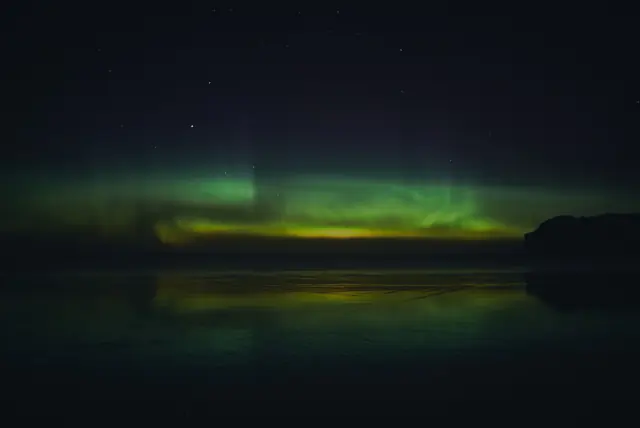
Aurora seen from the contiguous United States differs from Arctic aurora in important ways. At these latitudes, the aurora is typically lower on the northern horizon rather than overhead. During moderate events (KP 5-6), expect a greenish glow on the northern horizon, sometimes with vertical rays or pillars extending upward. The display may pulse slowly, brightening and dimming over minutes.
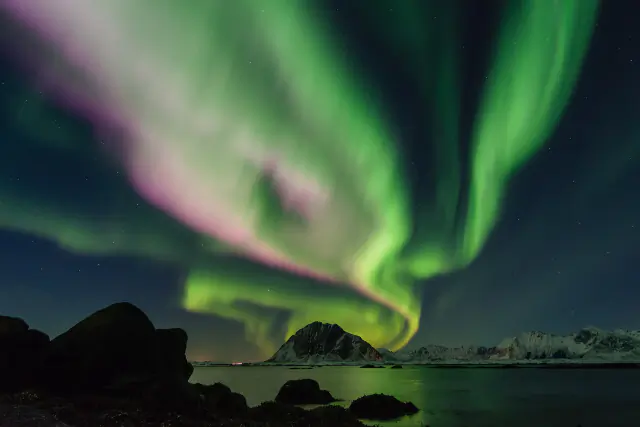
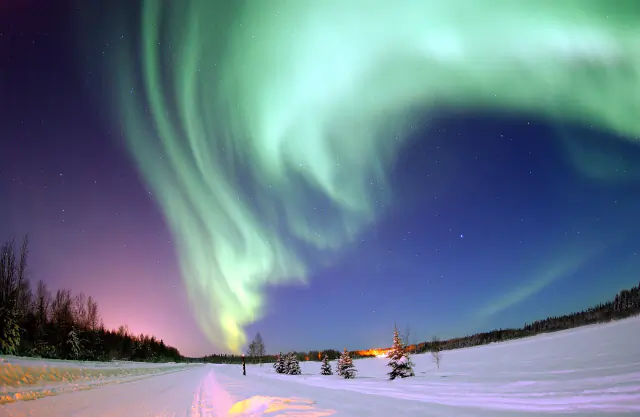
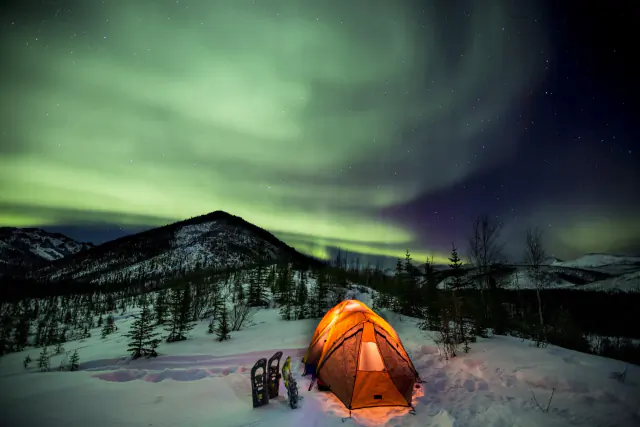
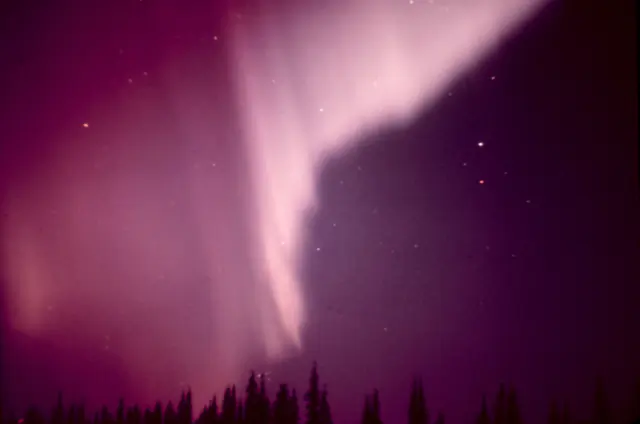
During strong storms (KP 7-8), the aurora can climb well above the horizon, developing vivid green curtains and purple or red upper edges. These displays are unmistakable even to the naked eye and can be genuinely spectacular, filling a significant portion of the northern sky.
During rare extreme events (KP 8-9, which occur perhaps once or twice per solar cycle), full-sky aurora with overhead coronas can be visible from the northern US. These events — like the famous October 2003 "Halloween storms" or the May 2024 event — produce vivid, multi-colored displays comparable to what you would see from the Arctic. They are rare but unforgettable.
Camera sensitivity is your ally at these latitudes. A good camera with long-exposure capability (10-25 seconds, ISO 3200-6400, f/2.8) will reveal colors and structure that may appear as a faint glow to the naked eye during moderate events. Many Americans have their first aurora "sighting" through a camera and are amazed to see vivid colors on their screen. During strong events, the colors are clearly visible without any camera assistance.
The STEVE phenomenon (Strong Thermal Emission Velocity Enhancement) is sometimes visible at lower latitudes alongside or instead of traditional aurora. STEVE appears as a narrow purple or mauve arc stretching across the sky, sometimes accompanied by a green "picket fence" pattern. It occurs equatorward of the main auroral oval and is more commonly photographed from the lower 48 than traditional aurora curtains.
Tips for Seeing Northern Lights in the US
Use NOAA's 30-minute aurora forecast. NOAA's Space Weather Prediction Center provides a 30-minute aurora forecast map showing the predicted extent of the auroral oval over North America. When the oval's southern edge dips into or near your latitude, head to a dark location immediately. Combine this with our aurora forecast page for comprehensive planning.
Get away from city lights. Light pollution is the biggest challenge for lower-48 aurora viewing. Even a faint aurora glow that would be clearly visible from a dark location can be completely washed out by city lights. Use light pollution maps (available at darksitefinder.com) to locate the nearest dark-sky area. A general rule: drive at least 30-60 minutes from any city with a population over 50,000.
Face north with an unobstructed horizon. Lower-latitude aurora appears low on the northern horizon, so any trees, buildings, or hills to your north will block the view. Lakeshores (especially Lake Superior), prairies, beaches, and hilltops with northern views are ideal. Agricultural fields in the northern Great Plains provide perfect flat horizons.
Be patient and persistent. Lower-48 aurora is not guaranteed even when forecasts look promising. The auroral oval may not dip far enough south, or cloud cover may intervene. Treat aurora watching as a hobby that rewards persistence over time rather than a single-trip guarantee. Over a solar cycle, dedicated observers in the northern tier states will witness dozens of displays.
Download the right apps. My Aurora Forecast, Aurora Alerts, and Hello Aurora all provide push notifications for geomagnetic activity. Set your alert threshold to KP 5 if you are in the northern tier states. When an alert fires during dark hours, check the sky or drive to your nearest dark location.
National and state parks are your allies. Dark sky parks and reserves provide the controlled lighting conditions essential for aurora viewing. Check the International Dark-Sky Association's list of certified dark sky places — many are in the northern US and provide excellent aurora viewing infrastructure including campgrounds and observation areas.
Borealis App
Aurora forecasts, social feed & Hunter Ranks
Frequently Asked Questions
Yes. The northern tier states (Michigan, Minnesota, Maine, Montana, North Dakota, Wisconsin, Vermont, New Hampshire, Idaho) see aurora multiple times per year during solar maximum periods. Strong geomagnetic storms (KP 7+) can bring aurora visible from most of the northern US. During rare extreme events (KP 9), aurora has been photographed as far south as Texas and Florida.
Michigan's Upper Peninsula is widely considered the best lower-48 aurora location, combining dark skies, high latitude (up to 47.5°N), Lake Superior reflections, and relatively easy access. Minnesota's Boundary Waters and Maine's northern interior are close runners-up. North Dakota's flat terrain provides unobstructed horizons that are excellent for catching aurora low on the northern horizon.
For the northern tier states (47-49°N), KP 5-6 typically produces visible aurora on the northern horizon. For mid-northern states (44-46°N), KP 6-7 is needed. For the central US (40-43°N), KP 7-8 is required. For the southern US, only extreme storms (KP 9) bring any aurora possibility. These are general guidelines — dark skies and clear horizons can allow visibility at slightly lower KP levels.
Michigan's Upper Peninsula sees visible aurora approximately 15-30 nights per year during solar maximum periods, making it surprisingly productive for a lower-48 location. Not all of these are dramatic displays — many are subtle glows best captured by camera — but several times per year the UP experiences vivid naked-eye displays with green curtains and colored fringes.
STEVE (Strong Thermal Emission Velocity Enhancement) is a recently identified atmospheric phenomenon that appears as a narrow purple or mauve arc across the sky, sometimes with a green 'picket fence' pattern. It occurs equatorward of the main aurora and is actually more commonly visible from the lower 48 states than traditional aurora. STEVE often accompanies moderate geomagnetic storms and has been photographed from many northern and central US states.
The equinox months — late September to October and late February to March — are statistically the best due to enhanced geomagnetic coupling. However, strong storms can produce lower-48 aurora in any month from September through March. Monitor NOAA's space weather forecasts and aurora alert apps year-round during the dark season for the best results.
A camera with manual settings dramatically enhances the experience at lower latitudes, as it reveals colors invisible to the naked eye during moderate events. A DSLR or mirrorless camera with a wide-angle lens (14-24mm), a sturdy tripod, and knowledge of long-exposure settings (ISO 3200-6400, f/2.8, 10-25 seconds) are ideal. During strong events, aurora is clearly visible to the naked eye without any equipment.
Related Articles
Destination
Northern Lights in Canada
Canada offers vast wilderness aurora viewing across its northern territories, from the aurora capital of Yellowknife to ...
Destination
Northern Lights in Alaska
Alaska is America's ultimate aurora frontier, where northern lights dance above vast wilderness stretching from the Arct...
Destination
Northern Lights in Iceland
Iceland offers an otherworldly aurora borealis experience set against volcanic landscapes, glaciers, hot springs, and bl...