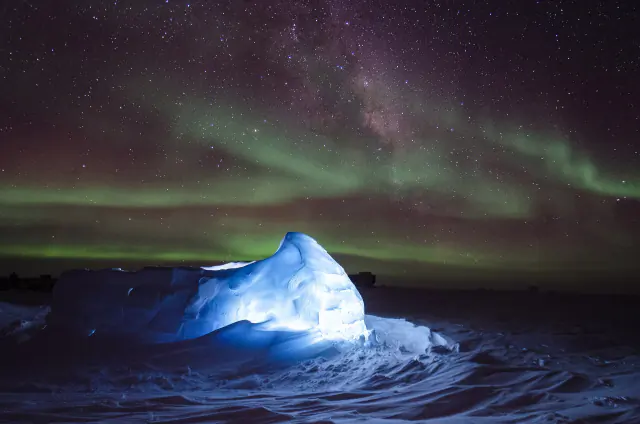
Southern Lights
Northern Lights in New Zealand
New Zealand occupies a privileged position as the most accessible landmass close to the southern auroral oval. When geomagnetic storms push the aurora australis northward, New Zealand's pristine dark skies and stunning South Island landscapes provide a front-row seat to the southern lights — a phenomenon witnessed by far fewer people than its northern counterpart.
Aurora Australis: New Zealand's Southern Lights
The aurora australis (southern lights) is the Southern Hemisphere counterpart to the aurora borealis, produced by the same solar wind interaction with Earth's magnetosphere. While the southern auroral oval primarily sits over Antarctica and the Southern Ocean, during periods of elevated geomagnetic activity it expands northward to reach the southern coasts of New Zealand, particularly the South Island and Stewart Island.
New Zealand's advantage lies in its geographic position and exceptional dark skies. The South Island extends to 46.6°S, and Stewart Island reaches 47.2°S — the closest easily accessible landmass to the auroral zone in the Southern Hemisphere (the only closer alternative is Tasmania, Australia). New Zealand's relatively low population density outside major cities, combined with the government's commitment to dark sky preservation, creates viewing conditions that are among the best in the world.
The country hosts the Aoraki Mackenzie International Dark Sky Reserve, the world's largest dark sky reserve, centered around Lake Tekapo and Mount Cook. This reserve, covering 4,367 square kilometers, maintains light pollution at near-natural levels. When aurora australis activity reaches this area, the displays are set against crystalline skies of extraordinary darkness and clarity.
Viewing the aurora australis is a rarer and more special experience than its northern counterpart. Far fewer people live at southern auroral latitudes compared to the north (there are no major population centers in the Southern Hemisphere south of 47°S, whereas millions live above 60°N). Successfully witnessing the southern lights carries a sense of exclusivity and achievement that adds to the experience.
Best Time to See Aurora Australis in New Zealand
The aurora australis season in New Zealand runs from March through September, corresponding to the Southern Hemisphere's autumn and winter months when nights are longest. The optimal window is April through August.
March and April bring the autumn equinox, which enhances geomagnetic activity (the same Russell-McPherron effect that boosts northern aurora in September-October). Nights are lengthening rapidly, and temperatures remain comfortable in most of the South Island (5°C to 12°C). Early autumn offers clear, settled weather patterns ideal for aurora watching.
May through July provide the darkest nights and longest viewing windows. The winter solstice in June gives the South Island over 16 hours of darkness. Temperatures drop (0°C to 8°C in lowland areas, well below freezing in alpine regions), but New Zealand's maritime climate prevents the extreme cold of northern aurora destinations. Winter can bring more cloud and rain, but clear spells offer exceptional viewing.
August and September combine the spring equinox aurora enhancement with lengthening days and improving weather. September is statistically one of the most geomagnetically active months globally, and several notable New Zealand aurora events have occurred in September.
The critical factor is geomagnetic activity. Unlike northern aurora destinations where the lights appear regularly, New Zealand requires elevated activity to see the aurora. A KP index of 5 or higher is typically needed for aurora visible from the South Island's main centers, though KP 4 can produce detectable glow from Stewart Island. Major displays (KP 7-9) produce vivid, multi-colored aurora visible across much of the South Island. Monitor the aurora forecast and sign up for alerts.
Best Places to See Southern Lights in New Zealand
Stewart Island (Rakiura) — New Zealand's premier aurora destination. At 46.9°S, Stewart Island is the country's closest landmass to the auroral oval. The island's name in Maori, Rakiura, is often translated as "land of the glowing skies" — possibly a reference to the aurora australis. With a population of just 400 and no streetlights outside the tiny settlement of Oban, Stewart Island offers extraordinary darkness. Mason Bay on the island's west coast provides a wide, open beach perfect for aurora photography.
Lake Tekapo — Located within the Aoraki Mackenzie International Dark Sky Reserve, Lake Tekapo offers world-class dark skies and a stunning foreground: the Church of the Good Shepherd on the lakeshore, one of New Zealand's most photographed buildings. When aurora australis reaches this latitude (44°S), the combination of pristine skies, the Southern Alps, and the turquoise glacial lake creates compositions of extraordinary beauty.
Queenstown — The adventure capital of New Zealand sits at 45°S on the shores of Lake Wakatipu, surrounded by the Remarkables mountain range. While Queenstown itself has some light pollution, short drives to Glenorchy, Kingston, or the Crown Range road reach excellent dark-sky locations. The mountain scenery provides dramatic aurora backdrops when activity is sufficient.
Dunedin — The southernmost city on New Zealand's South Island (45.9°S) offers good aurora potential from nearby dark-sky locations. The Otago Peninsula, Tunnel Beach, and the coastline toward the Catlins provide dark viewing spots with unobstructed southern horizons over the ocean.
Invercargill — New Zealand's southernmost city (46.4°S) is the closest major center to Stewart Island. The Oreti Beach, a vast sandy expanse south of the city, provides an excellent aurora viewing platform with a wide southern horizon over the ocean toward the auroral oval. The Catlins coast to the east offers equally good dark-sky locations with dramatic coastal scenery.
What to Expect from Aurora Australis in New Zealand
Aurora australis viewing in New Zealand is a patience-and-alert game rather than a guaranteed experience. Unlike northern lights in Arctic destinations, the southern lights require elevated geomagnetic activity to be visible from New Zealand. On a typical winter night without a geomagnetic storm, you will not see aurora. But when a coronal mass ejection or solar wind stream hits Earth's magnetosphere, the results can be extraordinary.
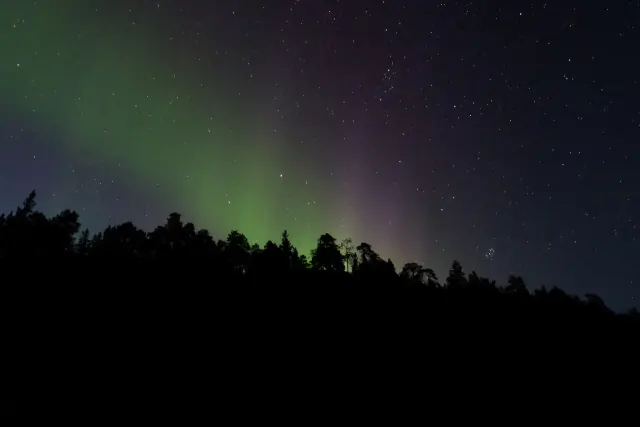
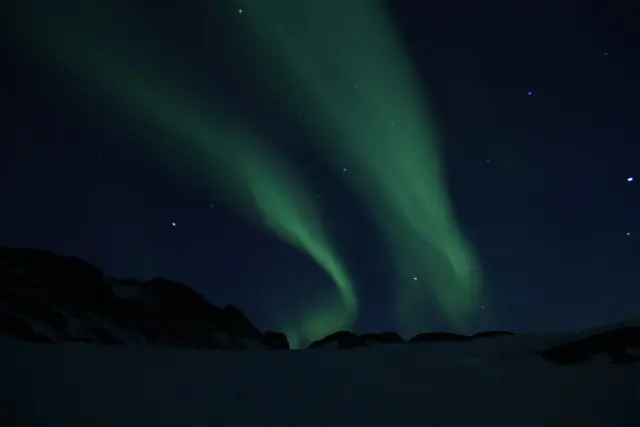
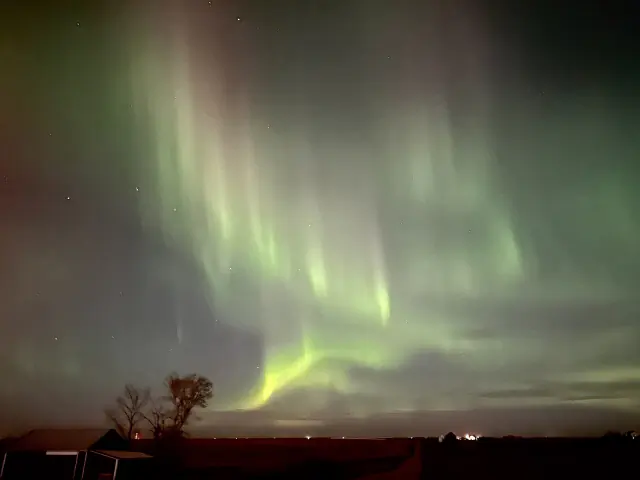
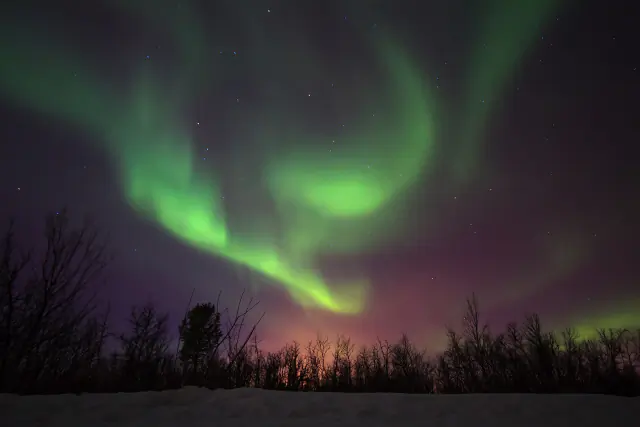
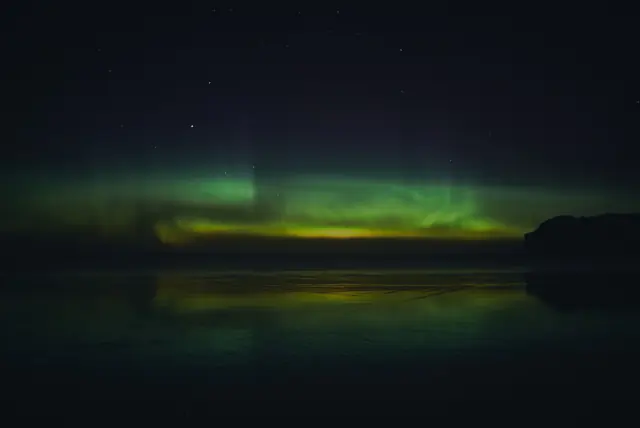
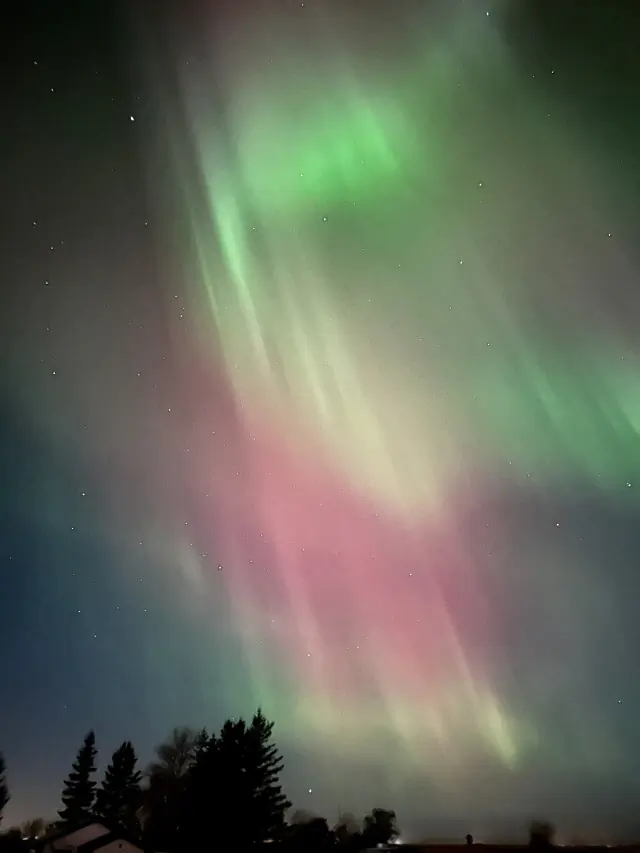
When aurora australis is visible from New Zealand, it typically appears as a green or reddish glow along the southern horizon. During moderate events (KP 5-6), vertical rays or pillars may extend upward from the glow. During major storms (KP 7-9), vivid green, red, and purple aurora can fill much of the southern sky and occasionally extend to the zenith, creating displays that rival anything seen at Arctic latitudes.
Cameras are essential at New Zealand latitudes. Long-exposure photography (10-30 seconds, ISO 3200-6400, f/2.8 or wider) will reveal colors and structure that may appear as a faint glow to the naked eye during moderate events. During strong events, the aurora is vivid to the unaided eye and can be truly spectacular on camera.
The rarity factor makes New Zealand aurora sightings deeply special. Aurora australis visible from the South Island's main centers occurs perhaps 10-20 times per year, with truly spectacular displays happening 3-5 times annually during solar maximum periods. Many New Zealanders have never seen the southern lights despite living in the South Island, making a successful sighting a memorable achievement.
Tips for Aurora Australis Viewing in New Zealand
Sign up for aurora alerts. Since aurora australis in New Zealand requires specific geomagnetic conditions, real-time alerts are essential. Follow aurora tracking social media accounts, join the Aurora Australis New Zealand Facebook group (one of the most active aurora communities in the world), and monitor our aurora forecast page. Many smartphone apps provide push notifications when KP levels reach aurora-viewing thresholds for your location.
Face south from a dark location. The aurora australis appears on the southern horizon. Get to a location with an unobstructed view to the south, away from city lights. Beaches, headlands, and elevated viewpoints facing south are ideal. The ocean provides a perfect dark foreground, and the horizon over water is typically unobstructed.
Stay for multiple nights. If you are specifically targeting the southern lights, plan a multi-night stay in a southern South Island location (Queenstown, Te Anau, Invercargill, Stewart Island). This increases your chances of catching an active night. Combine aurora watching with other South Island activities — the scenery, hiking, stargazing, and wildlife are world-class regardless of aurora activity.
Visit during solar maximum. The sun follows an approximately 11-year activity cycle. During solar maximum periods, geomagnetic storms are more frequent and more intense, significantly increasing the chances of aurora visible from New Zealand. Solar Cycle 25 is expected to peak in 2024-2026, making this an excellent period for aurora australis viewing.
Bring warm layers but not Arctic gear. New Zealand's southern winter is cold but not extreme. Temperatures at sea level range from 0°C to 8°C. Dress in warm layers with a windproof outer shell, bring a warm hat and gloves, and carry a thermos of hot drink. You will be standing still in the cold for potentially extended periods.
Borealis App
Aurora forecasts, social feed & Hunter Ranks
Frequently Asked Questions
Aurora australis visible from the South Island occurs approximately 10-20 times per year during solar maximum periods, and less frequently during solar minimum. Truly spectacular displays with vivid naked-eye colors happen 3-5 times per year. Stewart Island sees aurora more frequently due to its more southerly latitude. The key is monitoring forecasts and being in a dark location when geomagnetic activity is elevated.
A KP index of 5 or higher is generally needed for aurora visible from the South Island's main centers (Queenstown, Dunedin, Invercargill). KP 4 can produce a detectable glow from Stewart Island. KP 7+ produces vivid, multi-colored displays visible across much of the South Island. KP 8-9 events can occasionally bring aurora visible even from the North Island.
Very rarely. Auckland (36.8°S) would need an extreme geomagnetic storm (KP 9) and even then displays would be subtle. Wellington (41.3°S) has slightly better odds during major storms (KP 7-8+), particularly from dark locations south of the city. For reliable aurora viewing, travel to the South Island's southern half — ideally Stewart Island, Invercargill, Queenstown, or Dunedin.
Rakiura is the Maori name for Stewart Island, often translated as 'land of the glowing skies.' While the exact etymology is debated, many believe the name references the aurora australis and the vivid twilight colors visible from this southern latitude. It is a fitting name for New Zealand's premier aurora viewing destination.
The aurora australis and aurora borealis are essentially the same phenomenon occurring at opposite ends of the Earth. Both are caused by charged solar particles interacting with atmospheric gases along magnetic field lines. The colors, patterns, and behaviors are identical. The main difference is practical: far fewer people live at southern auroral latitudes, making aurora australis sightings rarer and more special.
The peak season runs from April through August (Southern Hemisphere autumn and winter), with the darkest nights from May to July. The equinox months of March-April and August-September often see enhanced geomagnetic activity. Unlike northern aurora destinations where 'best month' is crucial, in New Zealand the critical factor is geomagnetic activity rather than seasonal timing — a strong storm in any winter month will produce aurora.
Related Articles
Destination
Northern Lights in Australia
Australia offers the unexpected thrill of aurora australis viewing from its southernmost reaches. Tasmania and Victoria'...
Destination
Northern Lights in Argentina
Argentina's Tierra del Fuego, at the southern tip of South America, offers a rare and exhilarating chance to witness the...