Northern Lights Destination
Northern Lights in Cairngorms, Scotland
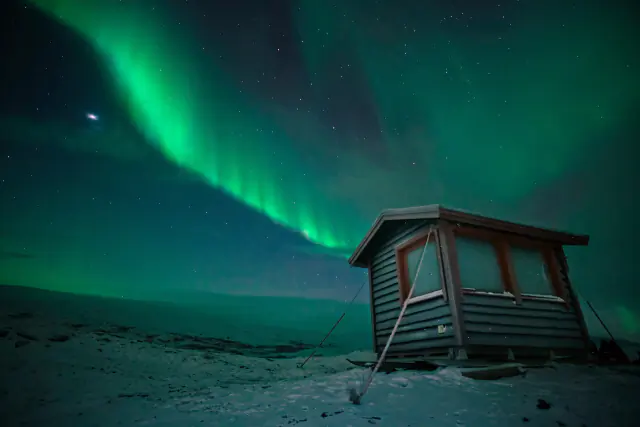
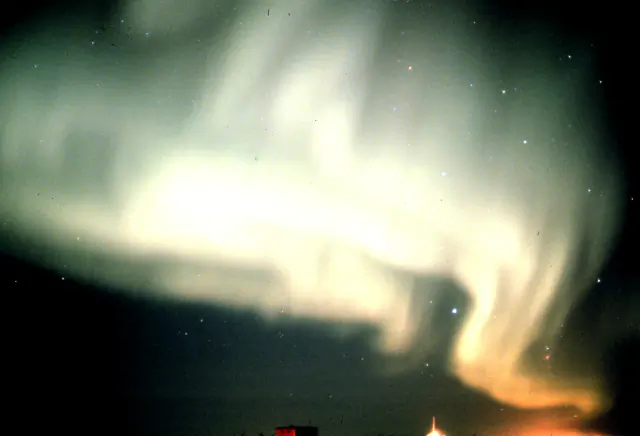
The Cairngorms National Park offers the UK's most reliable northern lights viewing — where ancient Highland mountains meet some of Britain's darkest and most pristine skies.
Aurora in Britain's Biggest National Park
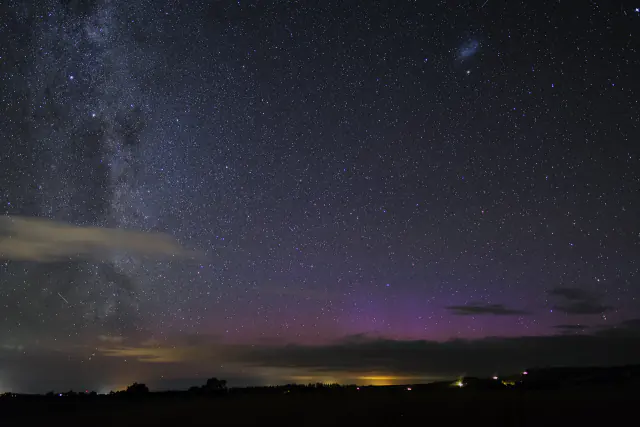
The Cairngorms at 57.08°N sits in the Scottish Highlands, a latitude comparable to southern Alaska. When the KP index reaches 5 or higher, the northern lights become visible across the park, and during major geomagnetic storms, spectacular displays can fill the Highland sky from horizon to horizon.
The Cairngorms was one of the first areas in the UK to gain recognition as a dark sky destination. The park's interior has minimal light pollution thanks to sparse population and strict planning controls. The high-altitude plateaus — the largest area of high ground in the British Isles — provide elevated viewing positions above any residual haze or light from surrounding valleys.
Aurora sightings in the Cairngorms have increased in public awareness with the rise of social media and aurora alert apps. What was once considered a rare event is now recognized as a regular occurrence during active solar periods, with dedicated communities of Scottish aurora hunters sharing real-time reports and photographs.
Best Viewing Spots in the Cairngorms
Loch Morlich near Aviemore provides one of the most photographed aurora settings in Scotland. The beach at the loch's shore faces north toward the Cairngorm plateau, and on still nights, the aurora reflects perfectly in the water. The surrounding Caledonian pine forest adds atmospheric foreground.
Glenmore Forest Park offers multiple dark viewing locations within the ancient Caledonian pine forest. The Cairngorm Mountain ski area car park at elevation provides views above the tree line, though access depends on winter road conditions.
Loch an Eilein near Rothiemurchus, with its island castle ruins, creates an iconic Scottish foreground for aurora photography. Grantown-on-Spey and the Tomintoul area in the northeast of the park offer some of the darkest skies in the region.
The Spey Valley running through the park provides numerous accessible viewpoints where the river's reflective surface enhances aurora displays.
When to See the Northern Lights in the Cairngorms
The aurora season in Scotland runs from September through March, with the darkest and longest nights falling between November and February. The equinox periods in late September and late March are statistically the most geomagnetically active, though displays can occur at any time during the dark months.
A KP index of 5 or higher is generally needed for visible displays. During solar maximum years, this threshold is reached far more frequently. Monitoring services like AuroraWatch UK and space weather apps provide valuable real-time alerts for Scottish aurora hunters.
Cloud cover is the primary challenge in Scotland. The Highlands experience maritime weather with frequent cloud and precipitation. However, the Cairngorms benefit from a rain shadow effect — sitting east of the wettest Highland areas — and cold, clear spells in winter can produce excellent viewing windows. Checking hourly weather forecasts and being willing to drive to clear patches are essential strategies.
Getting to the Cairngorms and Practical Tips
The Cairngorms are approximately 2.5 hours from Edinburgh and 2 hours from Aberdeen by car. The nearest airports are Inverness (45 minutes), Aberdeen (2 hours), and Edinburgh (2.5 hours). Aviemore is the main tourist hub with hotels, restaurants, and shops.
Accommodation ranges from luxury Highland lodges to budget hostels and camping. Winter is a popular season for skiing and winter sports, so book accommodation in advance. The park's visitor centers provide information on dark sky locations and aurora-friendly activities.
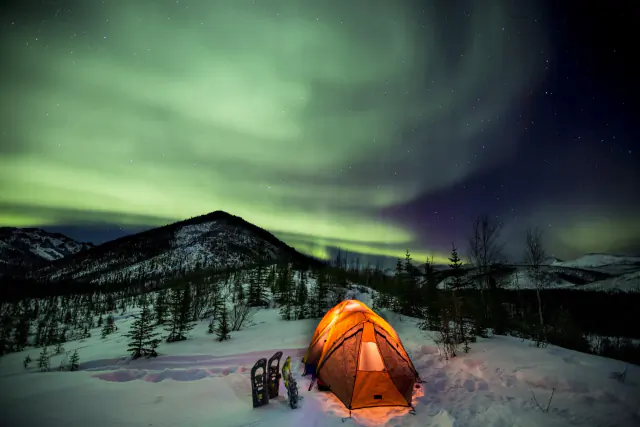
Scottish winter weather is milder than Arctic destinations but still challenging. Temperatures range from -5°C to 5°C at valley level, dropping significantly on the plateaus. Wind, rain, and snow are common. Waterproof clothing and warm layers are essential. The mountains can be dangerous in winter — stick to accessible valley locations for aurora viewing unless you're an experienced mountaineer.
Plan the trip
Getting to Cairngorms
Aurora trips need three things booked together: a flight into the right airport, somewhere dark to stay, and usually a car, because the sky you get is the sky above wherever you can drive to that night.
Compare flightsLive fares into Inverness Airport (INV), the closest airport to Cairngorms.
Affiliate links. Booking through them costs you nothing extra and helps keep this site running.
Borealis App
Aurora forecasts, social feed & Hunter Ranks
Frequently Asked Questions
During active solar periods, the Cairngorms can see aurora several times per month during the dark season (September-March). During solar minimum, events are less frequent — perhaps 5-10 per season. Monitoring AuroraWatch UK alerts significantly improves your chances of catching a display.
A KP index of 5 is generally the minimum for visible aurora from the Cairngorms. KP 6-7 produces more impressive displays with overhead color. Exceptional events of KP 8-9 can create stunning displays visible across all of Scotland.
The Cairngorms is one of the best, particularly for combining dark skies with stunning scenery. Shetland and Orkney, being further north, see aurora more frequently and at lower KP levels. The Cairngorms' advantage is accessibility, accommodation options, and the dramatic Highland mountain setting.
It's extremely rare. Scottish summer nights are very short at this latitude, with only a few hours of true darkness around midsummer. The aurora season effectively runs from September through March, with the darkest months (November-February) offering the most viewing hours.
Related Articles
Destination
Northern Lights in Isle of Skye
The Isle of Skye, Scotland's most dramatic island, combines rugged mountain scenery, medieval castles, and dark skies fo...
Destination
Northern Lights in Orkney
The Orkney Islands, lying just off Scotland's northeast tip, are among the best places in the UK to see the northern lig...
Destination
Northern Lights in Shetland
The Shetland Islands at 60°N are the most northerly part of the United Kingdom and the best location in Britain for seei...