Northern Lights Destination
Northern Lights in Minnesota Boundary Waters, United States
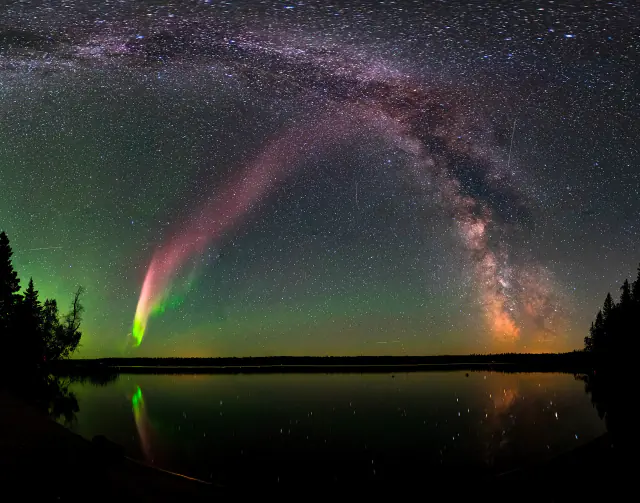
Minnesota's Boundary Waters offer the darkest skies in the Lower 48 — a million-acre wilderness of pristine lakes where the northern lights reflect in waters untouched by modern light.
Northern Lights in the Land of 10,000 Lakes
Minnesota's northern border reaches nearly 49°N, placing the Boundary Waters Canoe Area Wilderness (BWCAW) at a latitude favorable for aurora viewing. With a KP index of 5, the northern lights become visible across Minnesota's northern tier, and the BWCAW's legendary dark skies reveal displays with stunning detail.
The BWCAW encompasses over 1 million acres of protected wilderness with over 1,000 pristine lakes connected by portage routes. Motor boats are restricted, and the area has no roads, buildings, or artificial light. This creates dark-sky conditions that are among the best in the contiguous United States.
Aurora reflected in Minnesota's countless lakes creates mirror-image displays of extraordinary beauty. The boreal forest shorelines, rocky outcrops, and island-studded waters provide quintessential North American wilderness aurora backdrops.
Best Aurora Viewing Spots in Minnesota
The Boundary Waters Canoe Area Wilderness itself offers the darkest conditions. Popular entry points like Ely, Grand Marais, and Tofte provide access to backcountry campsites on remote lakes with no light pollution. Paddling to a campsite and watching aurora from your tent door is a bucket-list experience.
The North Shore of Lake Superior along Highway 61 from Duluth to Grand Portage provides accessible roadside aurora viewing with the world's largest freshwater lake as foreground. Split Rock Lighthouse State Park and Gooseberry Falls State Park offer iconic Northern Minnesota foregrounds.
Voyageurs National Park near International Falls provides another excellent dark-sky location on the Canadian border, with lakes, forests, and historic voyageur routes. Ely, gateway to the BWCAW, provides convenient accommodation near dark-sky access points.
Planning an Aurora Trip to Northern Minnesota
Northern Minnesota is accessible from Duluth (DLH) or Minneapolis-St. Paul (MSP) airports. Duluth is about 2.5 hours from the Boundary Waters entry points. The North Shore Scenic Drive (Highway 61) from Duluth provides excellent aurora viewing along its entire length.
Accommodation ranges from Ely's lodges and outfitters to Grand Marais's charming hotels and Duluth's full urban amenities. BWCAW camping requires permits (reservable in advance) and proper wilderness gear. Winter camping in the BWCAW is for experienced winter campers only.
Minnesota winters are severely cold (-15°C to -25°C in the north), with heavy snow. The cold produces clear skies and ice-covered lakes that reflect aurora beautifully. Winter driving requires caution but roads are well-maintained. Many visitors prefer the autumn season (September-October) for milder temperatures and spectacular fall colors combined with aurora potential.
Plan the trip
Getting to Minnesota Boundary Waters
Aurora trips need three things booked together: a flight into the right airport, somewhere dark to stay, and usually a car, because the sky you get is the sky above wherever you can drive to that night.
Compare flightsLive fares into Duluth International Airport (DLH), the closest airport to Minnesota Boundary Waters.
- Where to stayMinnesota Boundary Waters has few listed hotels, so this compares places to stay around Maine Aroostook County, the main base nearby.
- Car hireChasing clear skies means driving. Pick up at Duluth International Airport.
- Guided toursAurora chases and activities around Minnesota Boundary Waters.
Affiliate links. Booking through them costs you nothing extra and helps keep this site running.
Borealis App
Aurora forecasts, social feed & Hunter Ranks
Frequently Asked Questions
From northern Minnesota (Boundary Waters area), aurora is visible roughly 10-20 times per year during active solar periods. The North Shore of Lake Superior provides slightly fewer but still regular opportunities. Strong displays with overhead color occur several times per year.
Camping provides the best experience with the darkest skies, but it's not required. The North Shore Highway 61, Ely area roads, and Voyageurs National Park all provide accessible dark-sky viewing from vehicles. September and October offer comfortable camping weather with aurora potential.
Split Rock Lighthouse State Park is one of Minnesota's most iconic aurora photography locations. The historic lighthouse on the Lake Superior cliff provides a powerful foreground subject, and the park's dark conditions reveal impressive displays during strong events.
During very strong events (KP 7+), faint aurora can be visible from Minneapolis suburbs with a clear northern horizon. However, the city's light pollution significantly limits the experience. Northern Minnesota, 3-5 hours north, is dramatically better.
Related Articles
Destination
Northern Lights in Michigan Upper Peninsula
Michigan's Upper Peninsula, surrounded by the Great Lakes, is one of the best places in the Lower 48 to see the northern...
Destination
Northern Lights in Wisconsin Northwoods
Wisconsin's Northwoods region, stretching along the Lake Superior shore and into the forested interior, offers excellent...
Destination
Northern Lights in North Dakota Dark Prairies
North Dakota's vast, empty prairies provide some of the darkest and most unobstructed skies in the Lower 48. The state's...