Northern Lights Destination
Northern Lights in North Dakota Dark Prairies, United States
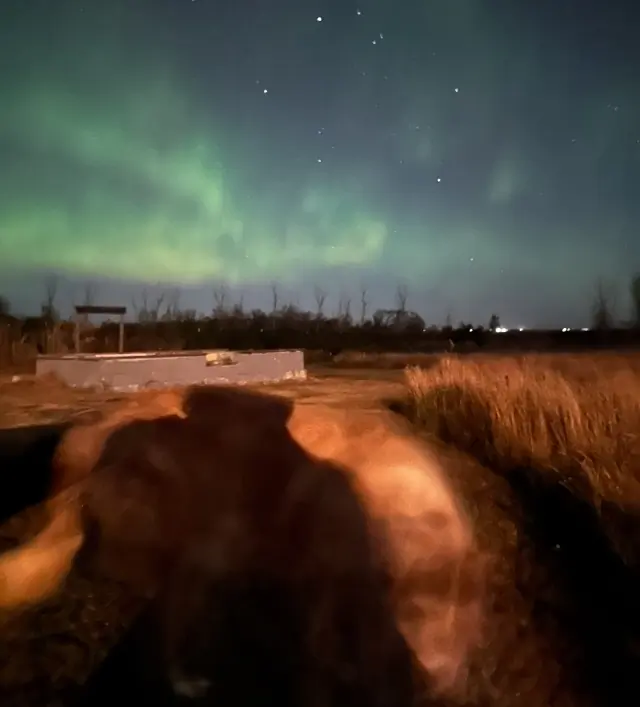
North Dakota's vast, empty prairies stretch to the Canadian border at 49°N — where enormous dark skies and flat horizons create a natural IMAX theater for the northern lights.
Aurora Over the Great Plains
North Dakota's northern border reaches 49°N, and the state's incredibly sparse population (just 780,000 in 70,000+ square miles) means exceptionally dark skies are available across most of the state. With a KP index of 5, the northern lights become visible, and the flat prairie terrain provides completely unobstructed views from horizon to horizon.
The experience of watching aurora from the North Dakota prairie is unique — the sky dominates in every direction, with the aurora stretching across the full width of the northern horizon. The flat terrain means there are no mountains, trees, or buildings to block the view. It's like standing inside a planetarium showing the northern lights.
Theodore Roosevelt National Park in the Badlands of western North Dakota is designated an International Dark Sky Park, combining some of the darkest measured skies in the US with dramatic eroded butte formations as foreground.
Best Viewing Spots in North Dakota
Theodore Roosevelt National Park (both North and South Units) provides the darkest measured skies in the state with dramatic Badlands terrain. The Painted Canyon Overlook offers accessible viewing with eroded buttes as foreground. The North Unit is less visited and darker.
The Pembina Gorge area in the northeast provides the most northerly viewing in the state with forested terrain and the gorge itself as foreground interest. The Turtle Mountains near the Canadian border offer slightly elevated viewing with forested hills.
Virtually any rural location in northern North Dakota provides excellent viewing conditions. The prairies along Highway 2 from Minot to Williston offer vast open views. Lostwood National Wildlife Refuge and Lake Sakakawea provide dark locations with natural foreground interest.
Getting to North Dakota for Aurora
North Dakota has airports at Bismarck (BIS), Fargo (FAR), Minot (MOT), and Grand Forks (GFK), all with connections to major hubs. The state is also accessible by driving from Minneapolis (3-4 hours to Fargo) or Winnipeg (2 hours to Pembina). Car rental is essential.
Accommodation includes small-town hotels, B&Bs, and campgrounds. Medora near Theodore Roosevelt NP is a charming Old West-themed town with lodging and restaurants. Larger cities like Bismarck, Fargo, and Minot offer full urban amenities.
North Dakota winters are severely cold (-15°C to -25°C) with wind chill making it feel much colder on the exposed prairie. The upside is crystal-clear skies during Arctic air outbreaks — the same cold that makes it uncomfortable also produces the best viewing conditions. Dress in layers and protect exposed skin.
Plan the trip
Getting to North Dakota Dark Prairies
Aurora trips need three things booked together: a flight into the right airport, somewhere dark to stay, and usually a car, because the sky you get is the sky above wherever you can drive to that night.
Compare flightsLive fares into Bismarck Airport (BIS), the closest airport to North Dakota Dark Prairies.
Affiliate links. Booking through them costs you nothing extra and helps keep this site running.
Borealis App
Aurora forecasts, social feed & Hunter Ranks
Frequently Asked Questions
Excellent. North Dakota's combination of 49°N latitude, vast dark prairies, and sparse population creates some of the best aurora viewing conditions in the Lower 48. Theodore Roosevelt National Park is an International Dark Sky Park with some of the darkest measured skies in America.
Theodore Roosevelt National Park offers the darkest skies and most dramatic scenery. For pure latitude advantage, the Pembina Gorge and Turtle Mountain areas near the Canadian border are ideal. Any rural location in northern North Dakota provides excellent dark conditions.
Very cold. Winter temperatures regularly drop to -20°C to -30°C (-4°F to -22°F), with wind chill making it feel -40°C or colder on the exposed prairie. Arctic outbreaks can bring even more extreme cold. Full winter gear including windproof layers and insulated boots is essential.
During strong events (KP 6+), aurora is visible from both cities, particularly from their outskirts. However, driving 30-60 minutes to rural prairie locations dramatically improves the experience. The light dome from even small North Dakota cities is noticeable.
Related Articles
Destination
Northern Lights in Montana Glacier National Park
Montana's Glacier National Park, with its dramatic peaks, pristine lakes, and dark mountain skies, offers some of the mo...
Destination
Northern Lights in Minnesota Boundary Waters
Minnesota's Boundary Waters Canoe Area Wilderness offers some of the darkest skies in the Lower 48 and one of the best a...
Destination
Northern Lights in Michigan Upper Peninsula
Michigan's Upper Peninsula, surrounded by the Great Lakes, is one of the best places in the Lower 48 to see the northern...