Northern Lights Destination
Northern Lights in Murmansk, Russia
Murmansk is the world's largest city above the Arctic Circle — a place where 300,000 people live beneath the auroral oval and the northern lights are a regular feature of winter nights.
Aurora in the World's Largest Arctic City
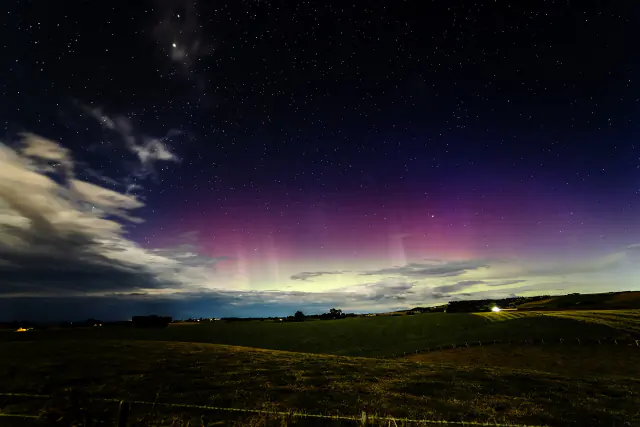
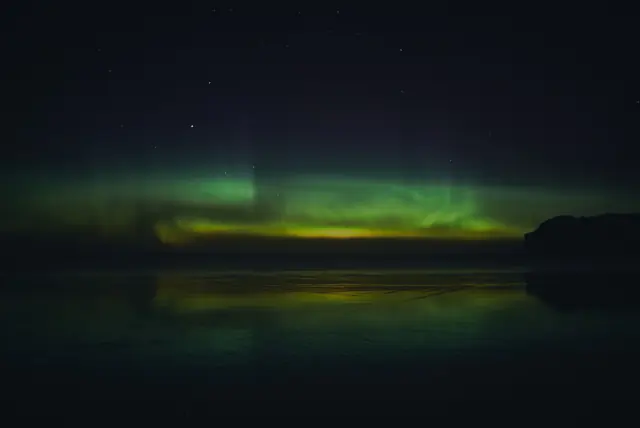
Murmansk at 68.97°N sits deep within the auroral zone, requiring only a KP index of 2 for visible displays. As the world's largest city above the Arctic Circle, it offers an unusual combination of urban amenities and regular aurora visibility that few places on Earth can match.
The city experiences polar night from early December to mid-January, when the sun doesn't rise above the horizon. During this period, the aurora can theoretically appear at any time, with the long polar darkness providing continuous viewing opportunities. Even during the twilight hours around midday, strong aurora can be visible.
Murmansk's Kola Peninsula location provides access to tundra, forests, and frozen lakes within a short drive of the city. While the city itself has significant light pollution, escaping to dark locations is straightforward, and the surrounding countryside offers pristine viewing conditions.
Where to View Aurora Near Murmansk
The road to Teriberka (about 2 hours northeast) passes through increasingly dark tundra with numerous stopping points. Many Murmansk aurora tour operators use locations along this route. The tundra landscape provides completely unobstructed views.
Lovozero, a Sami village about 2 hours southeast, offers cultural experiences combined with dark-sky viewing. The surrounding Lovozero Tundra provides vast wilderness viewing areas accessible by snowmobile.
Closer to the city, the hills above Murmansk and the shores of Kola Bay provide elevated viewpoints where the aurora can be seen above the city's light dome. Abram-Mys cape on the bay offers accessible dark conditions within 30 minutes of the city center.
Getting to Murmansk and Practical Tips
Murmansk Airport (MMK) receives flights from Moscow and St. Petersburg (2.5-3 hours). An overnight train from St. Petersburg (approximately 24 hours) provides a scenic alternative. International visitors will need a Russian visa — check current requirements before planning.
The city has a good range of hotels and restaurants, from international chains to local establishments. Notable sights include the nuclear-powered icebreaker Lenin (now a museum) and the massive Alyosha Monument. Russian cuisine — hearty soups, dumplings, and fresh fish — provides warming sustenance after cold aurora viewing.
Winter temperatures range from -10°C to -25°C, milder than interior Siberia due to the Gulf Stream's influence on the Barents Sea. The city is well-equipped for winter conditions. Some knowledge of Russian language is helpful, though tourism infrastructure has grown and English-speaking guides are available through tour operators.
Plan the trip
Getting to Murmansk
Aurora trips need three things booked together: a flight into the right airport, somewhere dark to stay, and usually a car, because the sky you get is the sky above wherever you can drive to that night.
Compare flightsLive fares into Murmansk Airport (MMK), the closest airport to Murmansk.
Affiliate links. Booking through them costs you nothing extra and helps keep this site running.
Borealis App
Aurora forecasts, social feed & Hunter Ranks
Frequently Asked Questions
Murmansk is generally safe for tourists, with crime rates comparable to other Russian cities. The main challenges are language barriers (less English spoken than in Moscow or St. Petersburg) and extreme cold. Use registered tour operators and guides for aurora excursions.
Most foreign nationals need a Russian visa. Requirements and availability change — check current regulations with the Russian embassy or consulate in your country before planning. Visa processing times can be lengthy, so apply well in advance.
From roughly December 2 to January 11, the sun doesn't rise above the horizon. However, there are a few hours of twilight around midday, and the city operates normally with artificial lighting. The darkness is ideal for aurora viewing at virtually any hour.
Both sit at similar latitudes above the Arctic Circle with excellent aurora potential. Tromso has more developed tourism infrastructure and dramatic fjord scenery. Murmansk is significantly cheaper, less touristy, and offers a unique Russian Arctic experience. Both are excellent choices.
Related Articles
Destination
Northern Lights in Teriberka
Teriberka, a remote fishing village on the Barents Sea coast, gained international fame through the film Leviathan and h...
Destination
Northern Lights in Apatity
Apatity, a small city in the heart of the Kola Peninsula, serves as a practical base for aurora viewing surrounded by th...
Destination
Northern Lights in Murmansk
Murmansk is the world's largest city above the Arctic Circle, with a population of nearly 300,000. Located on the Kola P...