Northern Lights Destination
Northern Lights in Idaho Central Dark Sky Reserve, United States
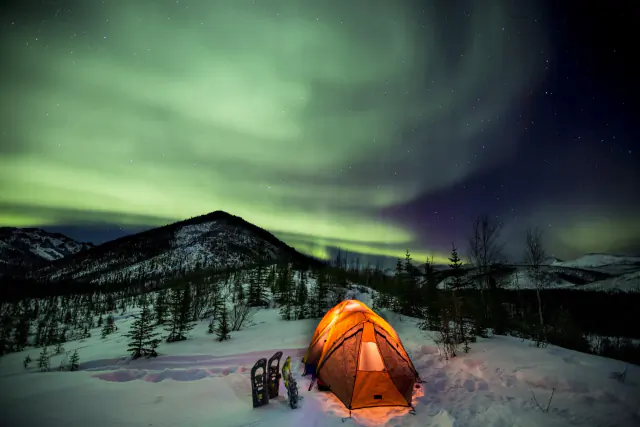
The Central Idaho Dark Sky Reserve — America's first — provides some of the nation's darkest skies, where the northern lights illuminate the rugged Sawtooth Mountains during strong geomagnetic storms.
Aurora in America's First Dark Sky Reserve
The Central Idaho Dark Sky Reserve, designated in 2017, encompasses 1,416 square miles of some of the darkest skies in the United States. The reserve covers the Sawtooth Valley, Stanley Basin, and surrounding wilderness areas, providing Bortle class 1-2 conditions — as dark as skies get anywhere in the country.
At approximately 47°N, northern Idaho requires a KP index of 5 for visible aurora, while the dark sky reserve area near Stanley at 44°N needs KP 6. When strong geomagnetic storms occur, the combination of extraordinary sky darkness and mountain scenery produces aurora visibility that rivals locations much further north.
The key advantage of Idaho is sky quality. In the Central Idaho Dark Sky Reserve, faint aurora structures and colors that are invisible under even moderate light pollution become clearly visible. A KP 6 display here can be more impressive than a KP 5 display at a light-polluted location further north.
Best Viewing Spots in Idaho
Stanley, a tiny town (population ~60) in the heart of the dark sky reserve, provides the best base for aurora viewing. The Sawtooth Mountains rising dramatically south of town create powerful foreground compositions. Redfish Lake provides a reflective alpine lake surface with the Sawtooths as backdrop.
Galena Summit on Highway 75 south of Stanley provides an elevated viewpoint at 8,701 feet with panoramic mountain views. The Salmon River corridor through the reserve offers dark conditions along its entire length.
For northern Idaho aurora (more frequent at KP 5), the Priest Lake and Lake Pend Oreille areas near the Canadian border provide large reflective surfaces and dark forest surroundings. Moscow Mountain and the Palouse rolling hills provide open northern horizons in the northwest.
Planning an Idaho Aurora Trip
The nearest major airports are Boise (BOI) — about 3 hours from Stanley — and Spokane (GEG) for northern Idaho. Sun Valley/Hailey Airport (SUN) is closest to the dark sky reserve but has limited service. A car is essential throughout Idaho.
Stanley has limited accommodation — a few lodges, cabins, and RV parks. Sun Valley/Ketchum (1.5 hours south) offers extensive resort accommodation. For northern Idaho, Sandpoint and Coeur d'Alene provide full services.
Idaho winters vary dramatically by elevation and region. Stanley is one of the coldest places in the Lower 48, regularly reaching -30°C or colder. Northern Idaho is milder due to Pacific influence. Snow is heavy in the mountains, and Highway 75 over Galena Summit can be treacherous in winter.
Plan the trip
Getting to Idaho Central Dark Sky Reserve
Aurora trips need three things booked together: a flight into the right airport, somewhere dark to stay, and usually a car, because the sky you get is the sky above wherever you can drive to that night.
Compare flightsLive fares into Boise Airport (BOI), the closest airport to Idaho Central Dark Sky Reserve.
Affiliate links. Booking through them costs you nothing extra and helps keep this site running.
Borealis App
Aurora forecasts, social feed & Hunter Ranks
Frequently Asked Questions
The Central Idaho Dark Sky Reserve has Bortle class 1-2 conditions, among the darkest measured in the United States. The zodiacal light, gegenschein, and the full extent of the Milky Way are visible. This extreme darkness makes even moderate aurora events spectacular.
Idaho offers some of America's darkest skies, which compensates for its moderate latitude. Northern Idaho (near the Canadian border) sees aurora at KP 5, comparable to Michigan or Minnesota. The Central Idaho Dark Sky Reserve requires KP 6 but reveals extraordinary detail in displays that do appear.
The equinox periods (September-October and March) bring the strongest geomagnetic activity. September offers comfortable temperatures before winter sets in. March combines returning warmth with equinox activity. Winter provides the longest nights but extreme cold, especially in Stanley.
Yes — Sun Valley is about 1.5 hours from Stanley and the dark sky reserve. Ski during the day, then drive north to Stanley for evening aurora viewing when conditions are favorable. The drive over Galena Summit is scenic but requires winter driving caution.
Related Articles
Destination
Northern Lights in Montana Glacier National Park
Montana's Glacier National Park, with its dramatic peaks, pristine lakes, and dark mountain skies, offers some of the mo...
Destination
Northern Lights in Oregon
Oregon's diverse landscape — from Pacific coastline to Cascade volcanoes to high desert — provides varied aurora viewing...
Destination
Northern Lights in North Dakota Dark Prairies
North Dakota's vast, empty prairies provide some of the darkest and most unobstructed skies in the Lower 48. The state's...